Our guides
Ménagerie du Jardin des Plantes — prix, hours and ticket costs in 2026
The Ménagerie, the zoo of the Jardin des Plantes — 2026 prices (€13, €10, family pass €40), hours, 122 species, history since 1794, access and the hotels nearest to it. Checked October 2026.
A zoo created in 1794, one of the oldest in the world
The Ménagerie du Jardin des Plantes opened in 1794, when a decree of the Convention created it from animals confiscated in the streets and survivors of the royal menagerie at Versailles. It then had 58 animals. The Museum counts it the second oldest zoo in the world, after Schönbrunn in Vienna (1752).
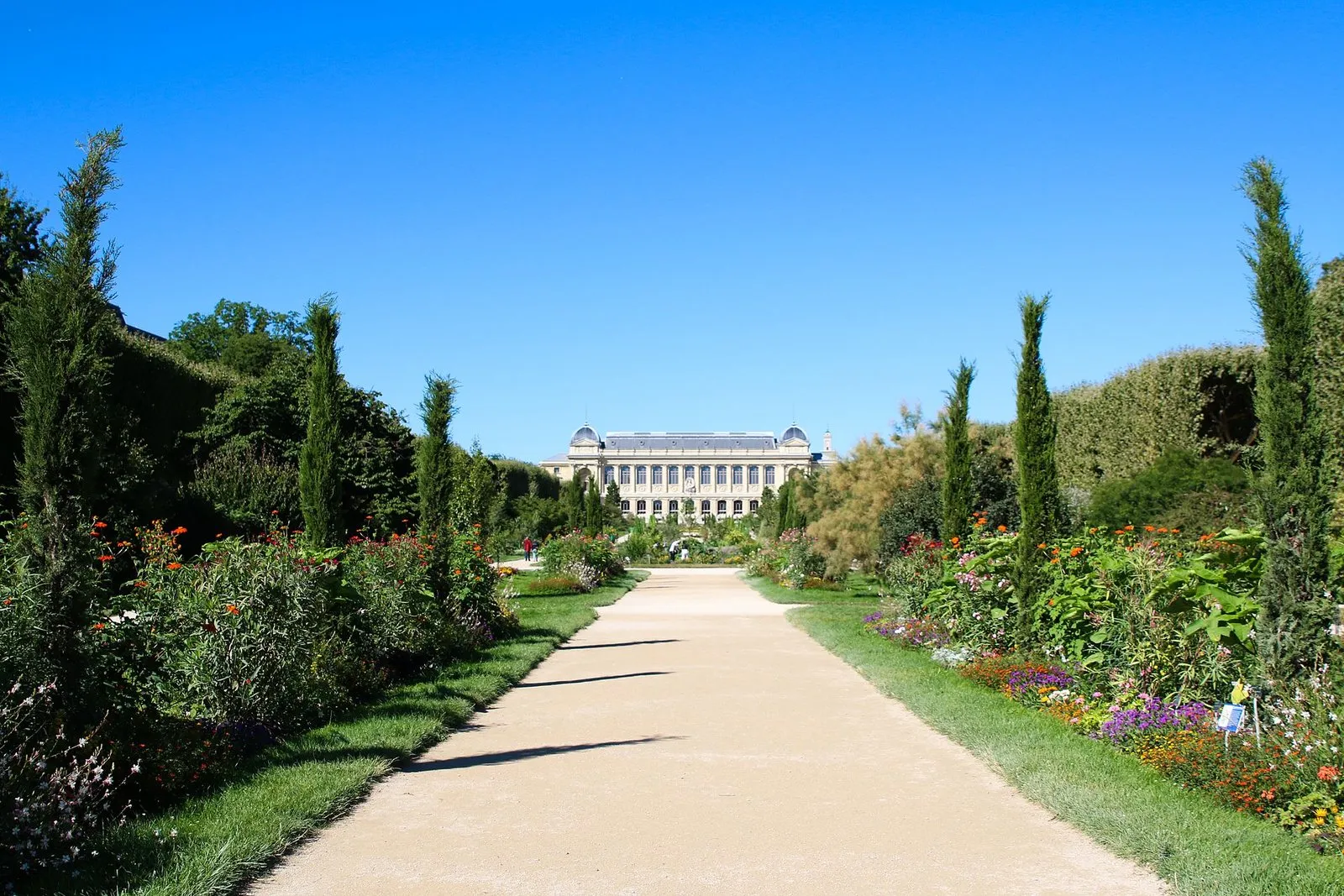
Photo: Baptiste Lafontaine, CC BY-SA 2.0, via Wikimedia Commons

Its buildings have been listed as historic monuments since 1993. Among them are the Rotonde, home to the giraffe Zarafa for 18 years after her arrival in 1827, the bear pits of 1805 converted in 2003 for red pandas and binturongs, and the art deco Fauverie of 1937 by René Berger. During the siege of Paris in 1870, some animals were killed by bombardment and others slaughtered to feed the population.
What lives there today
The Ménagerie shows 122 species, and favours animals of small and medium size: orangutans, red pandas, Seychelles tortoises, a Malayan tapir, a binturong, Arabian oryx. Almost 45 per cent are threatened or near-threatened on the IUCN Red List. The Museum cites the little bustard in France, the Arabian oryx and the golden lion tamarin among reintroductions in which conservation programmes have succeeded. A team of nearly 80 people looks after the animals.
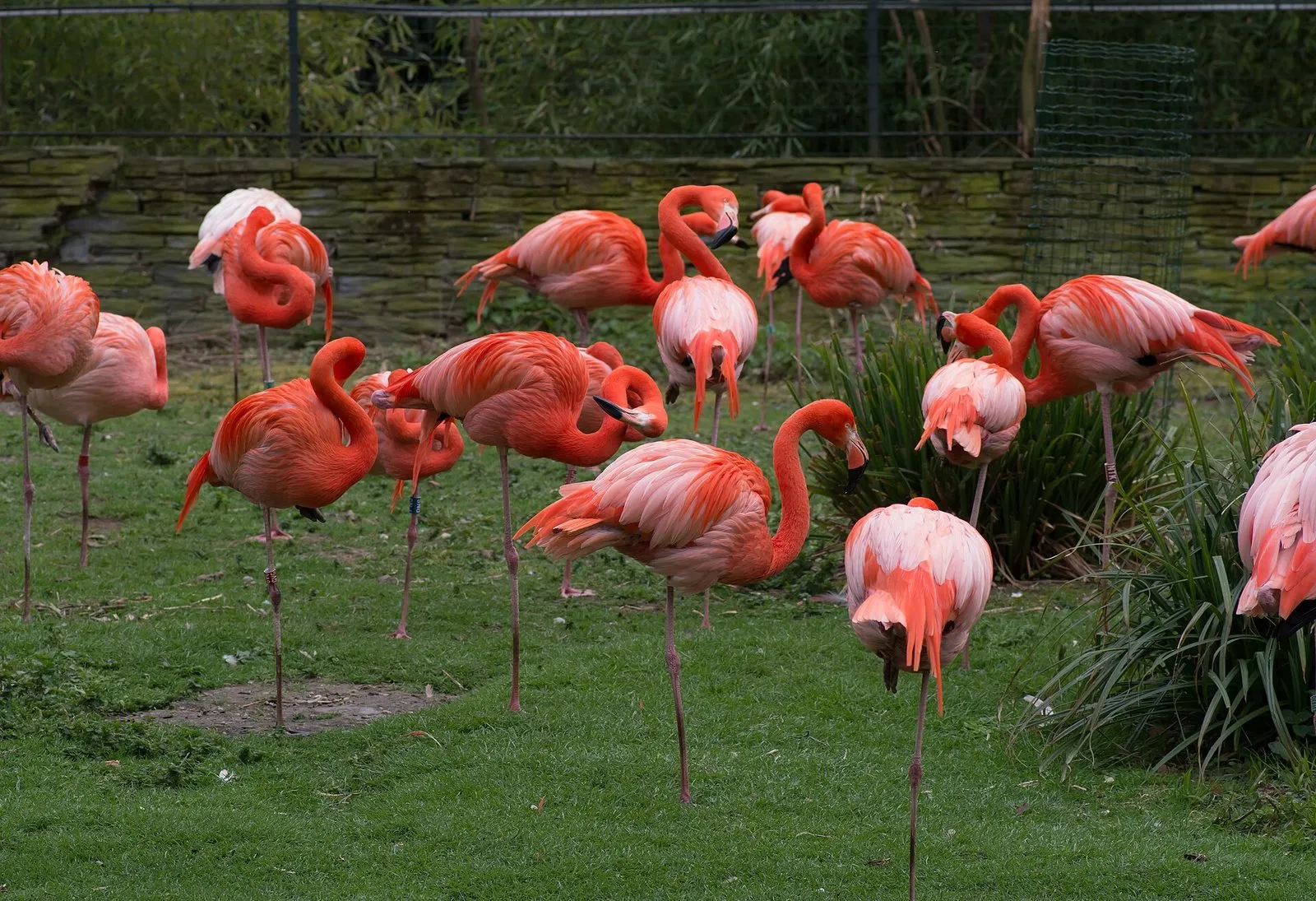
Photo: Dinkum, CC BY-SA 3.0, via Wikimedia Commons

Prices and what they cover
At €13 full rate and €10 reduced, the ticket also covers the keeper meetings and carnivore feedings named in the practical box above. A family pass at €40 is below the €46 that two full-rate and two reduced tickets would cost. For the neighbouring Natural History Museum, see our page on the Grande Galerie de l’Évolution, which has its own tickets; there is no combined ticket for all the sites, but a reduced rate on a second site within three months.
Getting there
Jussieu (lines 7 and 10) is about 390 metres from the point we hold for the Ménagerie and Quai de la Rapée (line 5) about 424, which is 6 to 7 minutes on foot by our method (the straight line multiplied by 1.3, at 80 metres a minute). Gare d’Austerlitz (lines 5 and 10, RER C) is 488 metres away and Cardinal Lemoine (line 10) 651. The entrances are at 57 rue Cuvier and on the place Valhubert; the zoo covers about 5.5 hectares in the 5th arrondissement, according to Wikipedia.
Choosing your moment
The Ménagerie opens every day at 10 a.m. and closes at 6 p.m. until 25 October, then at 5 p.m. from 26 October to the end of February; tickets are sold until an hour before closing. Because the closing time drops by an hour, the afternoon visit gets shorter just as the days do. The keeper meetings are held on Wednesdays, at weekends and on public holidays outside school holidays, and the carnivore feeding on Mondays, Wednesdays, Fridays and Sundays. A visit timed for a Wednesday or a Sunday therefore falls on both.
In December the programme includes “Noël à la Ménagerie”. In 2026 an outdoor aviary for the orangutans is under construction, and no closure has been announced.
What to look at
- The Rotonde. Built between 1802 and 1812, it is the oldest structure still standing in the Ménagerie. Its plan recalls the cross of the Légion d’honneur, and the giraffe Zarafa lived in it for 18 years after her arrival in 1827.
- The great aviary. A metal structure of 1888, designed for the Exposition universelle, according to Wikipedia.
- The reptile gallery and the vivarium. The gallery dates from 1874 and the vivarium from 1926, according to Wikipedia; the official page dates the gallery to 1870 in its text and 1874 in its timeline.
- The primate house. Dated 1936 by the Muséum (Wikipedia gives 1934), it houses orangutans.
- The Fauverie. The art deco felines’ house of 1937 is the work of René Berger, who also designed the Grande Serre.
- The red pandas. They live in the former bear pits of 1805, converted in 2003. The red panda is a carnivore whose diet is almost vegetarian, with 90 per cent bamboo leaves.
Where to sleep nearby
The hotels nearest the Ménagerie are listed below the guide; the list of hotels near the Jardin des Plantes compares the whole sector, and the Gare d’Austerlitz side is the one reached from the stations above.
Combining it with
Measured from the Ménagerie’s coordinates; walking times by our method.
| Place | Distance | On foot |
|---|---|---|
| Jardin des Plantes | 179 m | 3 min |
| Institut du monde arabe | 453 m | 7 min |
| Natural History Museum | 462 m | 8 min |
| Grand Mosque of Paris | 552 m | 9 min |
| Arènes de Lutèce | 587 m | 10 min |
A full-price ticket gives a second site at the reduced rate within three months, which suits a split between the Ménagerie and the Grande Galerie.
The hotels closest to the Ménagerie
Two hotels stand nearest, measured as the crow flies from the point we hold for the Ménagerie (the entrances are at 57 rue Cuvier and place Valhubert): the Libertel Austerlitz Jardin des Plantes, about 398 metres away, and the Hôtel du Jardin des Plantes, about 447 metres. The next two, the Hôtel Monge and the Hôtel des Arènes on rue Monge, are 580 and 584 metres away. Our guide to hotels near the Jardin des Plantes covers the sector in full, and the garden is described on the Jardin des Plantes page.
History and distinctive features
- In 1793 a municipal order banned the display of wild animals in the streets of Paris; the confiscated animals were taken in at the Jardin des Plantes, and their owners became its first keepers. Source : jardindesplantesdeparis.fr
- In 1794 the surviving animals of the royal menagerie of Versailles and of the duc d’Orléans’s were transferred to Paris; a decree of the Convention created the Ménagerie, which then held 58 animals. Source : jardindesplantesdeparis.fr
- The giraffe Zarafa, who arrived in 1827, lived for 18 years in the Rotonde, a building whose plan recalls the cross of the Légion d’honneur. Source : jardindesplantesdeparis.fr
- The former bear pits (1805) were converted in 2003 to house red pandas and binturongs; the art deco Fauverie (1937) is the work of René Berger, architect of the Grande Serre. Source : jardindesplantesdeparis.fr
- The red panda, the only member of the family Ailuridae, is a carnivore on an almost vegetarian diet, about 90 per cent bamboo leaves. Source : jardindesplantesdeparis.fr
Frequently asked questions
How much does the Ménagerie du Jardin des Plantes cost?
€13 full rate and €10 reduced, according to the Jardin des Plantes site on 4 October 2026. A “Tribu” family pass is €40 for two adults and two young people aged 3 to 25, and an extra young person is €5 at the desk.
What are the opening hours of the Ménagerie?
Every day, 10 a.m. to 6 p.m. until 25 October 2026, then 10 a.m. to 5 p.m. until 28 February 2027. The last ticket is sold an hour before closing, and the zoo is closed on 25 December.
Who gets in free?
Children under 3 and holders of the Museum’s annual pass. Young people aged 3 to 25 pay the reduced rate.
How old is the Ménagerie?
It was created by decree in 1794 and is among the oldest zoos in the world; the Museum counts it second after Schönbrunn in Vienna, which dates from 1752.
Which animals can I see?
The zoo shows 122 species, preferring small and medium-sized animals: orangutans, red pandas, Seychelles tortoises, a Malayan tapir, a binturong and Arabian oryx. We do not name individual animals, because the Museum’s pages do not confirm every resident.
Is the Ménagerie affected by works in 2026?
An outdoor aviary for the orangutans is being built in 2026; the Museum announces no closure of the zoo.
What is included in the ticket?
Meetings with the keepers on Wednesdays, weekends and public holidays outside school holidays, and carnivore feeding on Mondays, Wednesdays, Fridays and Sundays; in December, “Noël à la Ménagerie”.
When are the keeper meetings at the Ménagerie?
On Wednesdays, at weekends and on public holidays outside school holidays, according to the Muséum. They are included in the ticket.
When are the carnivores fed?
On Mondays, Wednesdays, Fridays and Sundays, according to the Muséum, and the feeding is included in the ticket.
Which is the oldest building of the Ménagerie?
The Rotonde, built between 1802 and 1812, the oldest structure still standing there.
What did the Ménagerie become during the siege of 1870?
Some animals were killed by bombardment and others slaughtered to feed the population. Wikipedia names the elephants Castor and Pollux among them.
Is the Ménagerie open on public holidays?
Yes. It is open every day, including public holidays, and closes only on 25 December.
How many animals live in the Ménagerie?
The Muséum counts 122 species. In 1794 the Ménagerie began with 58 animals.