Our guides
Jardin des Plantes, Paris
The Jardin des Plantes in the 5th arrondissement — free garden hours until February 2027, greenhouse and gallery tickets, the closed palaeontology gallery and hotels nearby. Checked October 2026.
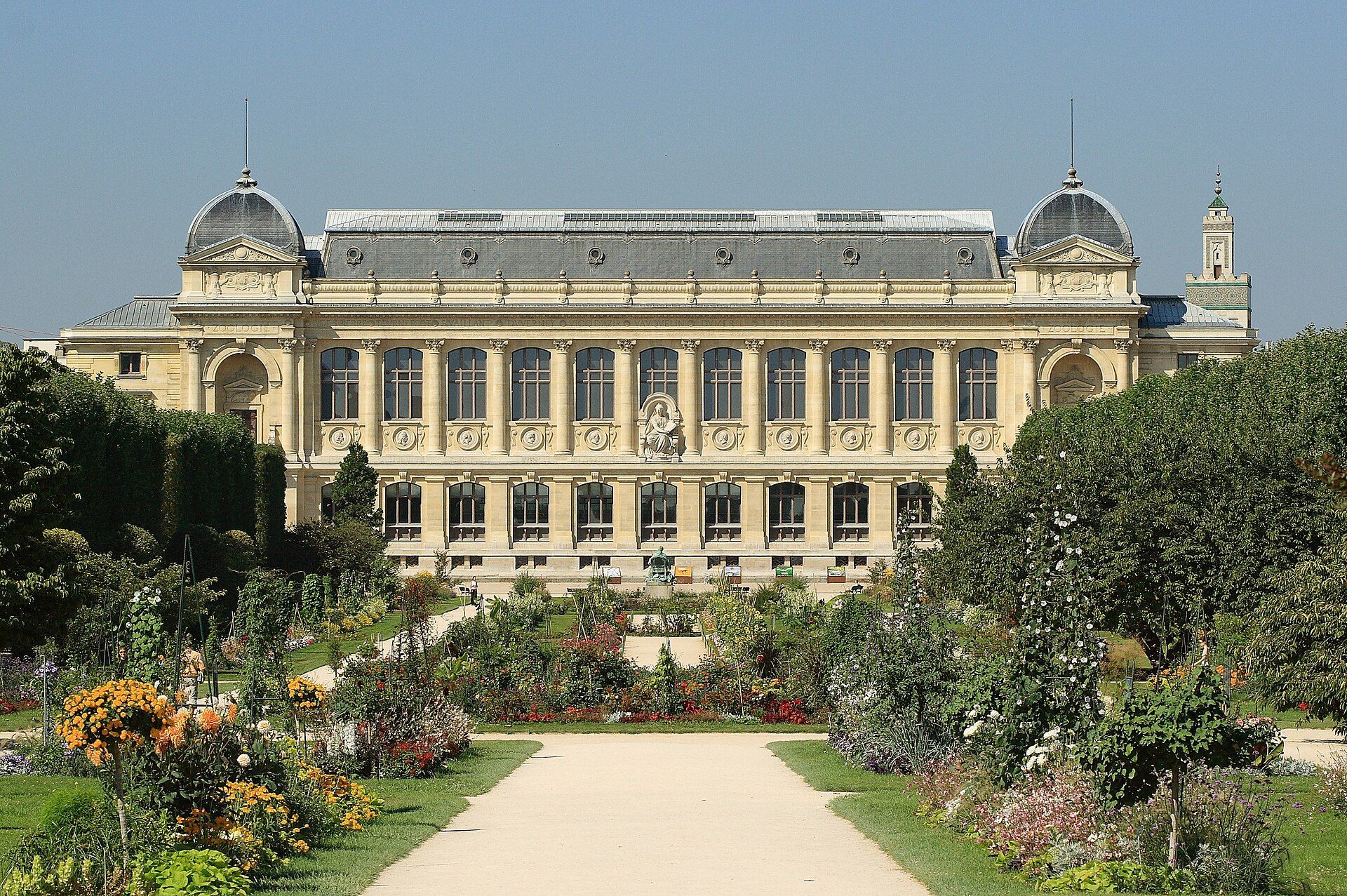
© Benh LIEU SONG, CC BY 3.0 — Wikimedia Commons

A medicinal garden that became a museum
The Jardin des Plantes lies between the Seine, at the Gare d’Austerlitz, and rue Geoffroy-Saint-Hilaire, and it is listed as a historic monument and as a “Jardin remarquable”. It began as a royal garden of medicinal plants, created by Louis XIII’s edict of 1626, and in 2026 the Muséum national d’Histoire naturelle marks 400 years. The allées, the carrés of the perspective, the botanical school of about 2,500 species, the rose garden, the alpine garden and the maze are free; the galleries, the Grandes Serres and the Ménagerie are not.
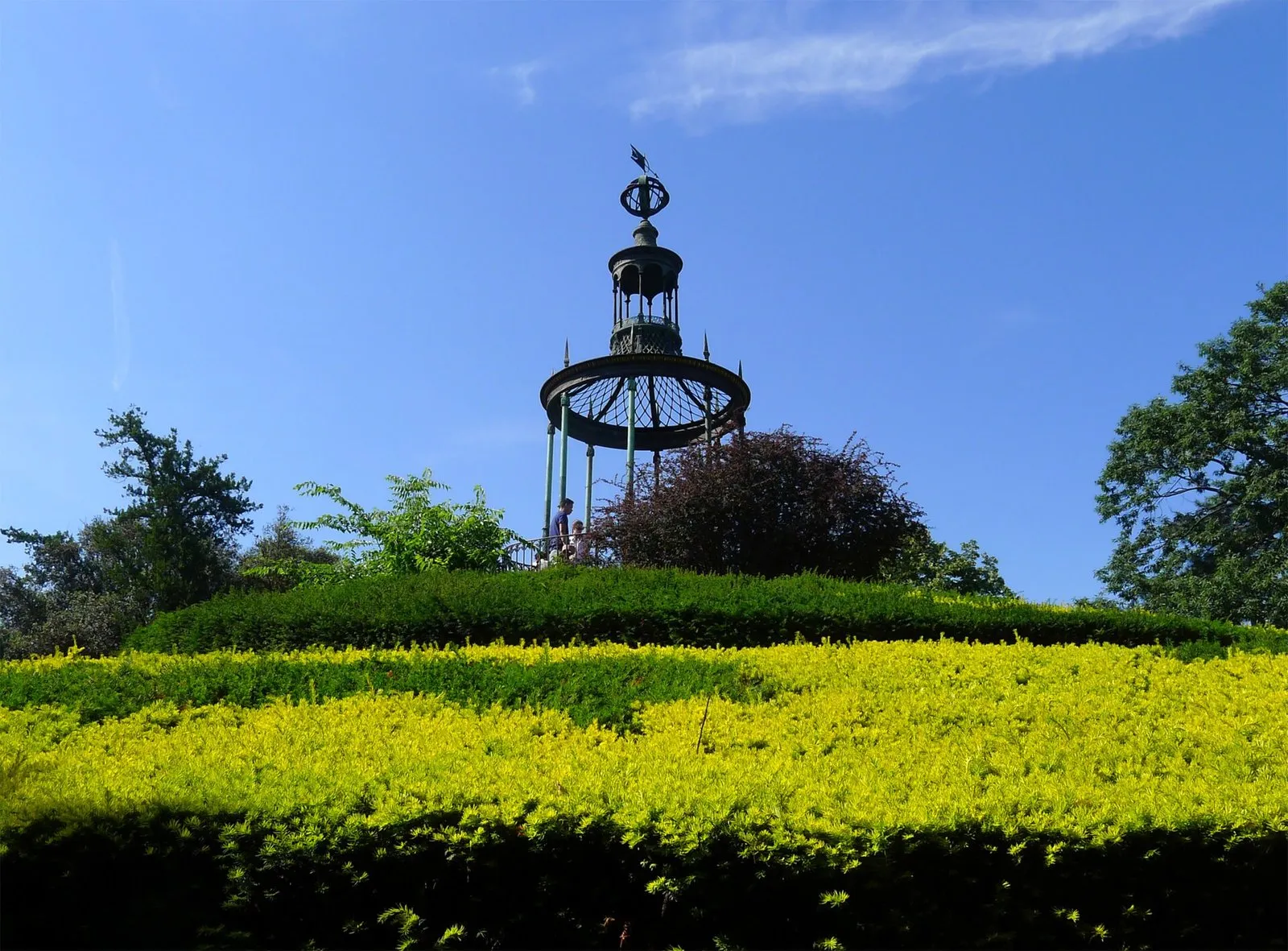
Photo: Mbzt, CC BY-SA 4.0, via Wikimedia Commons

What to see
- The Grandes Serres. Four greenhouses, for humid tropical forests, deserts and arid environments, New Caledonia, and the history of plants. In the New Caledonia house, 76% of the species grow nowhere else.
- The alpine garden. More than 2,000 mountain species, entered through a hidden entrance in the botanical school, open in the mornings only and closed from November to March.
- The rose garden. About 300 varieties.
- The Grande Galerie de l’Évolution. Open daily except Tuesday; its 2026 exhibition is the anniversary show listed above.
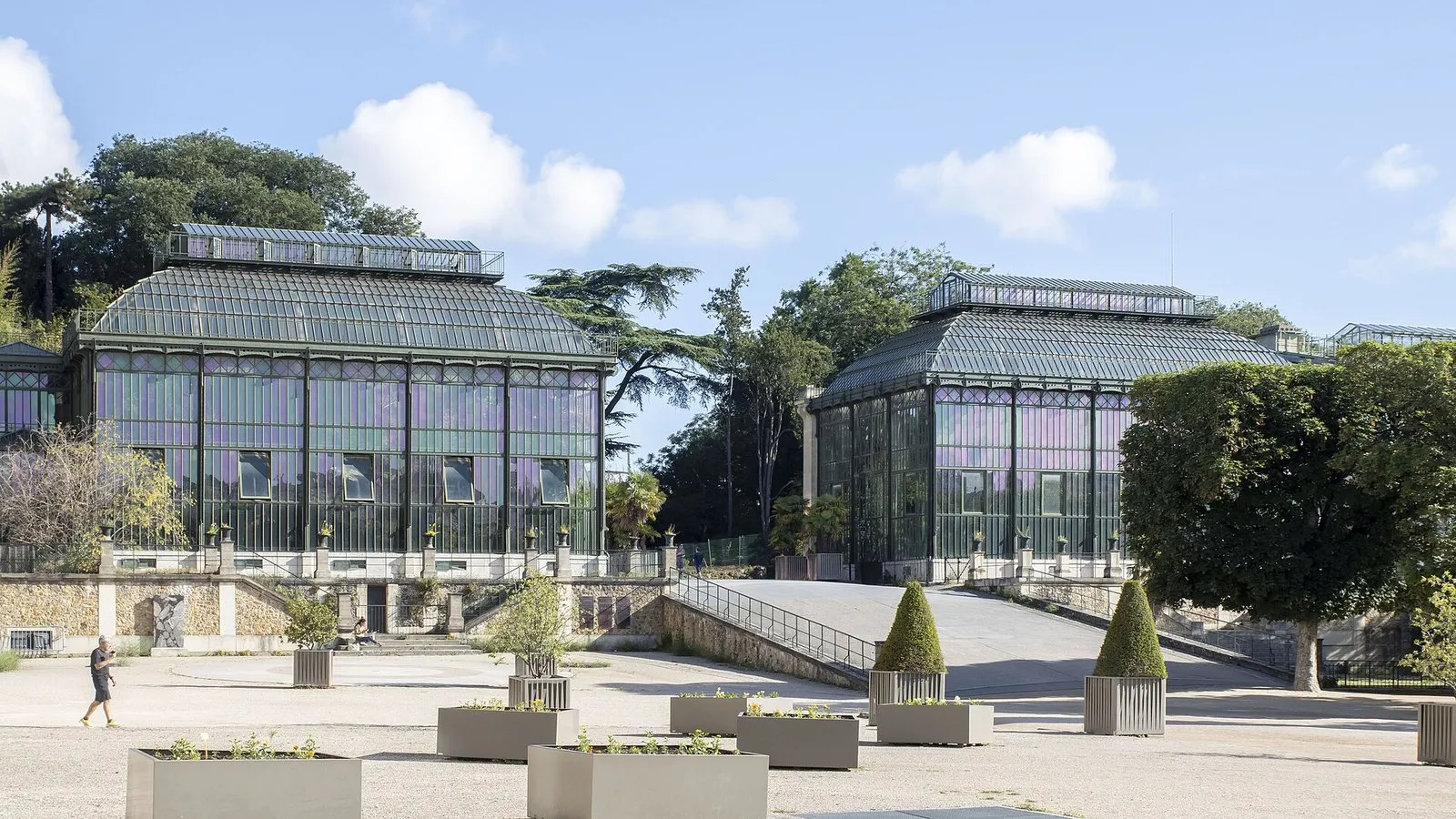
Photo: Arthur Weidmann, CC BY-SA 4.0, via Wikimedia Commons

Planning around the closures
The palaeontology gallery stays shut for works into 2027, so the museum visit now rests on the Grande Galerie and the geology gallery. The Tuesday closure applies to the Grandes Serres, the Grande Galerie and the geology gallery together, so on Tuesday only the garden itself is certain to be open; we have not read the Ménagerie’s opening days. From the end of October, the hours of both the garden and the greenhouses shorten by an hour.
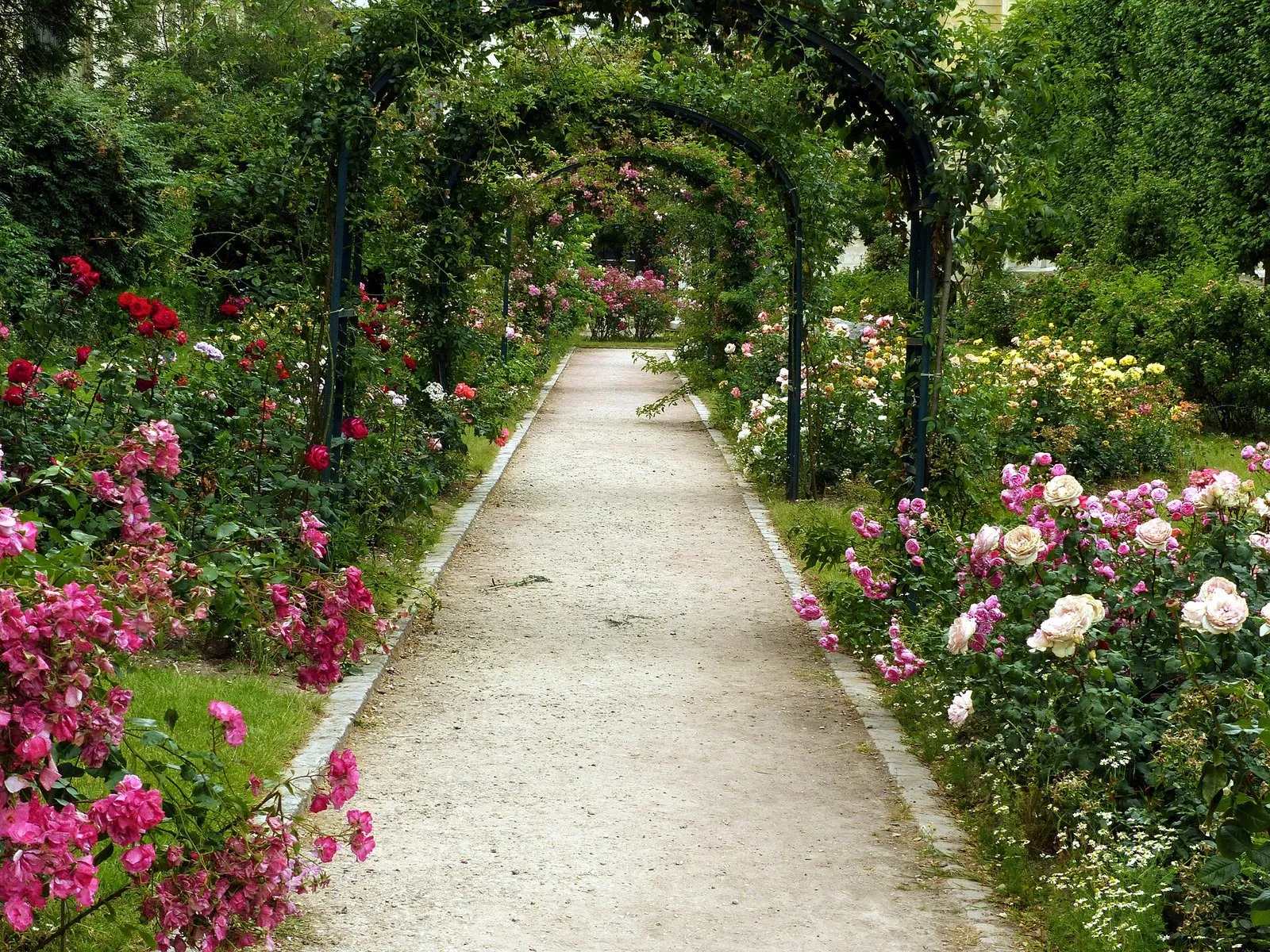
Photo: FreCha, CC BY-SA 4.0, via Wikimedia Commons

Getting there
Jussieu (lines 7 and 10) is the nearest station, about 411 metres from the point we hold for the garden; Gare d’Austerlitz (lines 5 and 10, RER C) is 431 metres away. By our method, which multiplies the straight line by 1.3 and walks at 80 metres a minute, those are 7 minutes for either. Quai de la Rapée (line 5), Place Monge (line 7) and Saint-Marcel (line 5) lie between 537 and 614 metres away. The garden has four entrances named in our data: 57 rue Cuvier, the place Valhubert, the rue Buffon and the rue Geoffroy-Saint-Hilaire, and Wikipedia counts twelve gates in all. The garden’s own page lists buses 24, 57, 61, 63, 67, 89 and 91, and a Batobus stop.
Choosing your moment
The garden is open every day of the year, 8 a.m. to 6.30 p.m. until 24 October and to 5.30 p.m. after that, so the first week of winter hours is the point at which an afternoon visit shortens. The alpine garden opens in the mornings only, 8 a.m. to noon, and closes from November to March. The greenhouses open at 10 a.m. and in winter close at 5 p.m., half an hour before the garden, with the last entry an hour before.
For a plan that includes the museums, remember that Tuesday is the closing day of the Grandes Serres, the Grande Galerie and the geology gallery. The “Automne tropical” exhibition in the greenhouses, on palms, runs from 15 October to 23 November 2026.
What is behind the gates
- The cedar. The Lebanon cedar planted in 1734 at Bernard de Jussieu’s request is the oldest of its species in France, according to the museum; legend says he carried the young cedars in his hat.
- The false acacia. A robinia moved about 1630 by Vespasien Robin is one of the first two in Europe, and its twin in the square Viviani is considered the doyen of Paris trees.
- The maze and its gazebo. The maze is a mound built over a medieval dump, according to Wikipedia, and the Buffon gazebo at the top is presented by the museum as one of the oldest metal constructions in the world.
- The greenhouses. The present Grandes Serres were built between 1834 and 1876, with a winter garden added in 1930 and the desert house in 2005. The tropical-forest house, of 750 square metres, dates from 1937 according to Wikipedia.
- The botanical school. About 2,500 species, according to the museum, with the alpine garden hidden in its grounds.
History in brief
Louis XIII created a royal garden of medicinal plants by an edict of January 1626, on the initiative of his physician Guy de La Brosse. The land was acquired in 1633 and the garden opened to the public in 1640. The Convention’s decree of 10 June 1793 turned it into the Muséum national d’Histoire naturelle, a museum and research centre at once. The campus beside the garden, the Buffon site, covers 3.5 hectares and is closed to the public; the whole domain is 27 hectares, according to Wikipedia.
Combining it with
Straight-line distances from the garden’s coordinates, with times by our walking method.
| Place | Distance | On foot |
|---|---|---|
| Ménagerie | 179 m | 3 min |
| Natural History Museum | 308 m | 5 min |
| Grand Mosque of Paris | 408 m | 7 min |
| Arènes de Lutèce | 559 m | 9 min |
| Institut du monde arabe | 591 m | 10 min |
| Place de la Contrescarpe | 750 m | 12 min |
The Ménagerie and the Natural History Museum are both within 310 metres, so a day can stay inside the Muséum’s own estate; the Mosque and the arènes widen it to the south and west.
Hotels near the Jardin des Plantes
The section below lists the hotels of our database nearest to the garden, in a straight line. Our list of hotels near the Jardin des Plantes gives the longer comparison. Among our guides, the points nearest to the garden in a straight line are the Grand Mosque of Paris, about 420 metres away, the Arènes de Lutèce, about 510 metres, and the Institut du monde arabe, about 575 metres; rue Mouffetard has no coordinates in our data. The museum side of the visit continues in our guide to the Natural History Museum and the Ménagerie.
History and distinctive features
- Louis XIII created a royal garden of medicinal plants by an edict of January 1626, at the initiative of his physician Guy de La Brosse; the land was bought in 1633 and the garden opened to the public in 1640. Source : mnhn.fr
- A decree of the Convention of 10 June 1793 turned the garden into the Muséum national d’Histoire naturelle, both a museum and a research centre. Source : mnhn.fr
- The cedar of Lebanon planted in 1734 at the request of Bernard de Jussieu is the oldest of its species in France, according to the garden; legend says Jussieu brought the young cedars back in his hat. Source : jardindesplantesdeparis.fr
- The present Grandes Serres were built between 1834 and 1876, in metal and glass, with a winter garden added in 1930 and the greenhouse of the deserts in 2005. Source : jardindesplantesdeparis.fr
- At the top of the maze, Buffon’s gloriette is presented by the Muséum as one of the oldest metal structures in the world. Source : jardindesplantesdeparis.fr
Hotels near the Jardin des Plantes
Some links are affiliate links: if you book through them, we may earn a commission, at no extra cost to you. How we are paid
Other hotels
- Libertel Austerlitz Jardin des Plantes ★★★ 5 min walk · 400 m See availability
- Hôtel du Jardin des Plantes ★★★ 6 min walk · 500 m See availability
- Hôtel Orphée ★★★ 8 min walk · 600 m See availability
- Hôtel Saint-Christophe ★★★ 9 min walk · 700 m See availability
- Best Western Quartier Latin Panthéon ★★★ 9 min walk · 700 m See availability
- Hôtel Monge ★★★★ 9 min walk · 700 m See availability
Within 600 m as the crow flies, nearest first. Walking times are estimates: straight-line distance × 1.3, at 80 metres a minute, to the station, not to a specific exit.
Tours and tickets
Some links are affiliate links: if you book through them, we may earn a commission, at no extra cost to you. How we are paid
-
GetYourGuide
Entry ticket to the Grande Galerie de l'Évolution
Admission to the Muséum's gallery of evolution in the Jardin des Plantes, listed on GetYourGuide when we looked on 6 October 2026; opening days and rates were not checked.
See it on GetYourGuide Partner link
Frequently asked questions
Is the Jardin des Plantes free?
The garden is: its alleys and gardens are free to enter all year. The Grandes Serres (€9), the Ménagerie (€13), the Grande Galerie de l’Évolution (€13) and the geology gallery (€9) are paid at the full rate.
What are the opening hours of the Jardin des Plantes?
Every day from 8 a.m., until 6.30 p.m. up to 24 October 2026 and until 5.30 p.m. from 25 October to 28 February 2027, with last entry 15 minutes before closing.
Which galleries are closed in 2026?
The Galerie de Paléontologie et d’Anatomie comparée, at 2 rue Buffon, has been closed for works since 19 January 2026, until some time in 2027. The Grandes Serres are also temporarily out of reach for wheelchair users, because the outside lift is out of order.
Is there a ticket covering all the sites?
No. Each site is sold separately; the “Découverte” offer gives a second site at the reduced rate, within three months of a full-price ticket.
What is on for the Muséum’s 400th anniversary?
“Artistes au Museum”, with more than 300 works, in the Grande Galerie de l’Évolution from 23 September 2026 to 7 March 2027; and “Automne tropical” in the Grandes Serres from 15 October to 23 November.
Which station should I use?
Jussieu (lines 7 and 10) is about 411 metres from the reference point of the garden in our data, and Gare d’Austerlitz (lines 5 and 10, RER C) about 431 metres; the garden also lists Censier-Daubenton on line 7 and buses 24, 57, 61, 63, 67, 89 and 91.
Is this the right garden, or are there others of the same name?
Several French cities have a jardin des plantes. This page covers the one in Paris, at 57 rue Cuvier, in the 5th arrondissement, which is the historic heart of the Muséum national d’Histoire naturelle.
How big is the Jardin des Plantes?
27 hectares for the whole domain, of which 23.5 are garden and 3.5 are the Buffon campus, which is closed to the public, according to Wikipedia.
What is the oldest tree in the Jardin des Plantes?
The museum names the Lebanon cedar of 1734, the oldest of its species in France, and a robinia moved about 1630, one of the first two introduced in Europe.
When is the alpine garden open?
Mornings only, 8 a.m. to noon, and it is closed from November to March.
Can you reach the Jardin des Plantes by boat or bus?
According to the garden’s page, there is a Batobus stop, and buses 24, 57, 61, 63, 67, 89 and 91 serve it.