Our guides
Place de la Contrescarpe
The place de la Contrescarpe in the 5th — origin of the name, Hemingway and Orwell, the Bohemian Rhapsody flash mob, metro access and hotels within a short walk. Checked October 2026.
© LPLT, CC BY-SA 3.0 — Wikimedia Commons

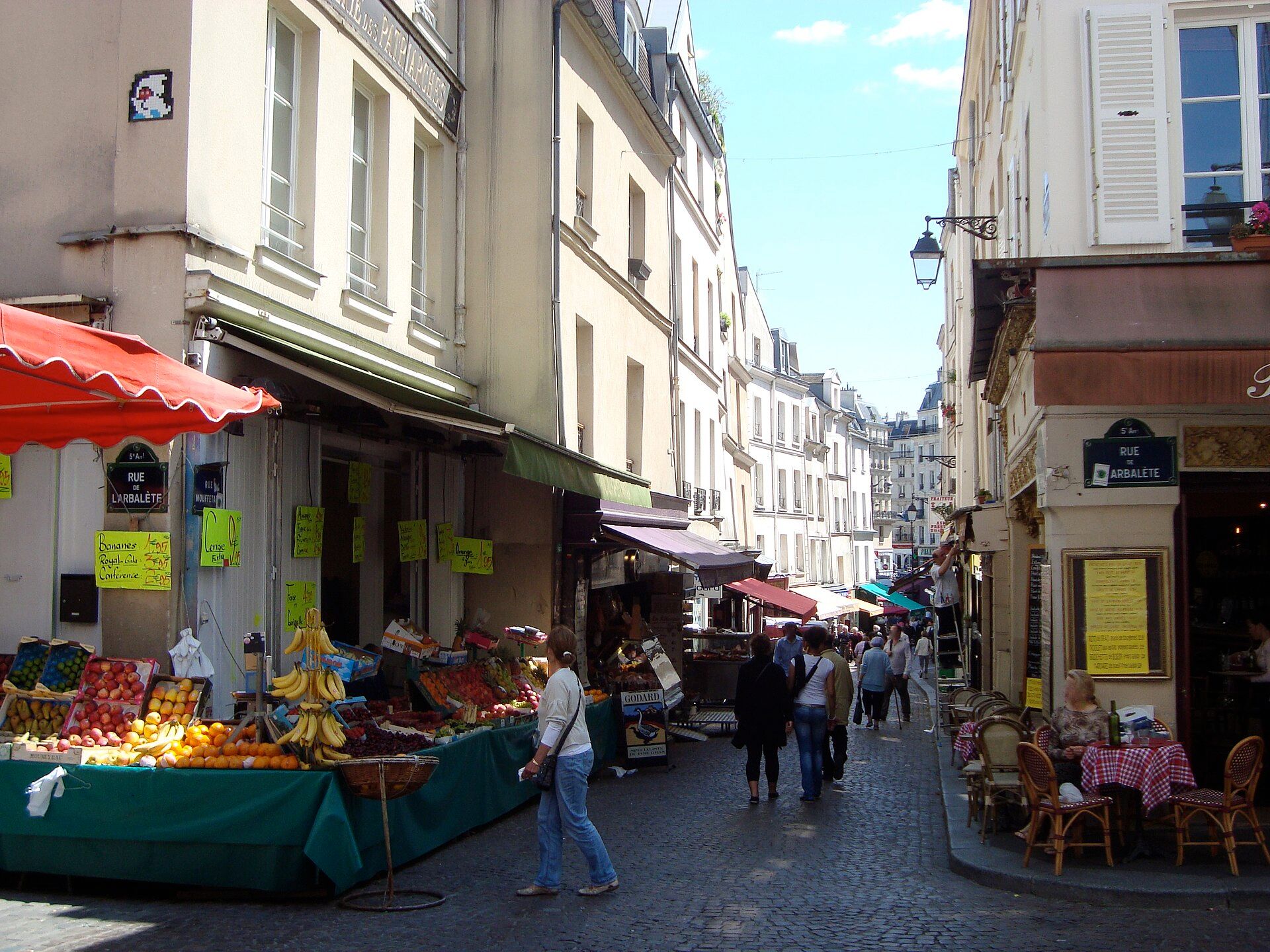
A small square at the top of rue Mouffetard
The place de la Contrescarpe is about forty metres across, with a fountain in the middle. It sits at the top of rue Mouffetard, where rue du Cardinal-Lemoine and rue Lacépède come in, and the four administrative quarters of the 5th arrondissement meet at its centre. Wikipedia notes the many cafés around it.
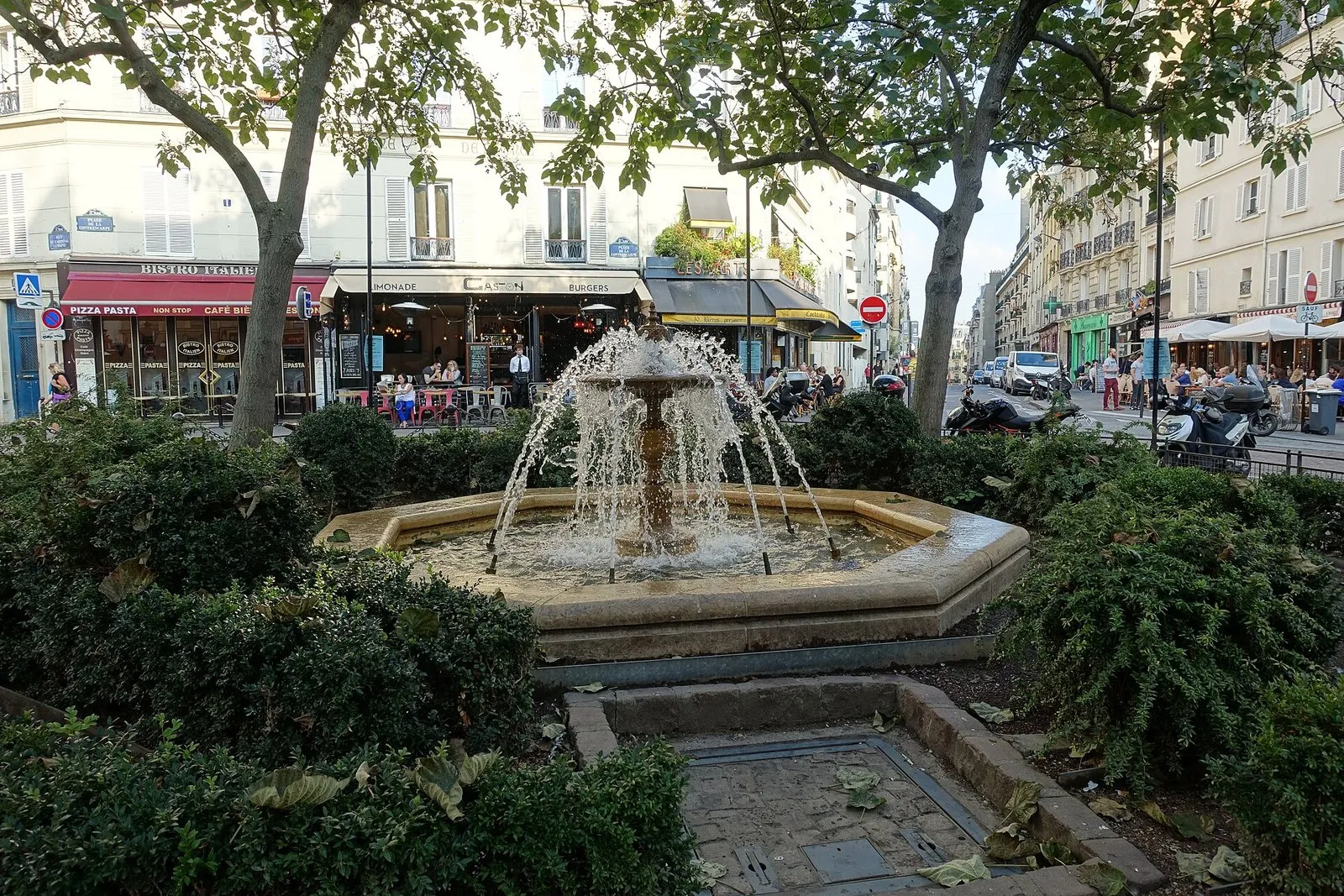
Photo: Guilhem Vellut, CC BY 2.0, via Wikimedia Commons

Nothing here is ticketed and nothing closes: this is a street-level square, not a monument. What it offers is a position: about 320 metres from the Panthéon, at the head of rue Mouffetard.
Writers and a viral chorus
Ernest Hemingway evokes the square in “A Moveable Feast”. From August 1922 to January 1923 he lived with Hadley at 74 rue du Cardinal-Lemoine, a few steps away, where a plaque carries the line “Such was Paris in our youth, when we were very poor and very happy”. George Orwell, who lived on rue du Pot-de-Fer between 1928 and 1930, describes the square in “Down and Out in Paris and London”.
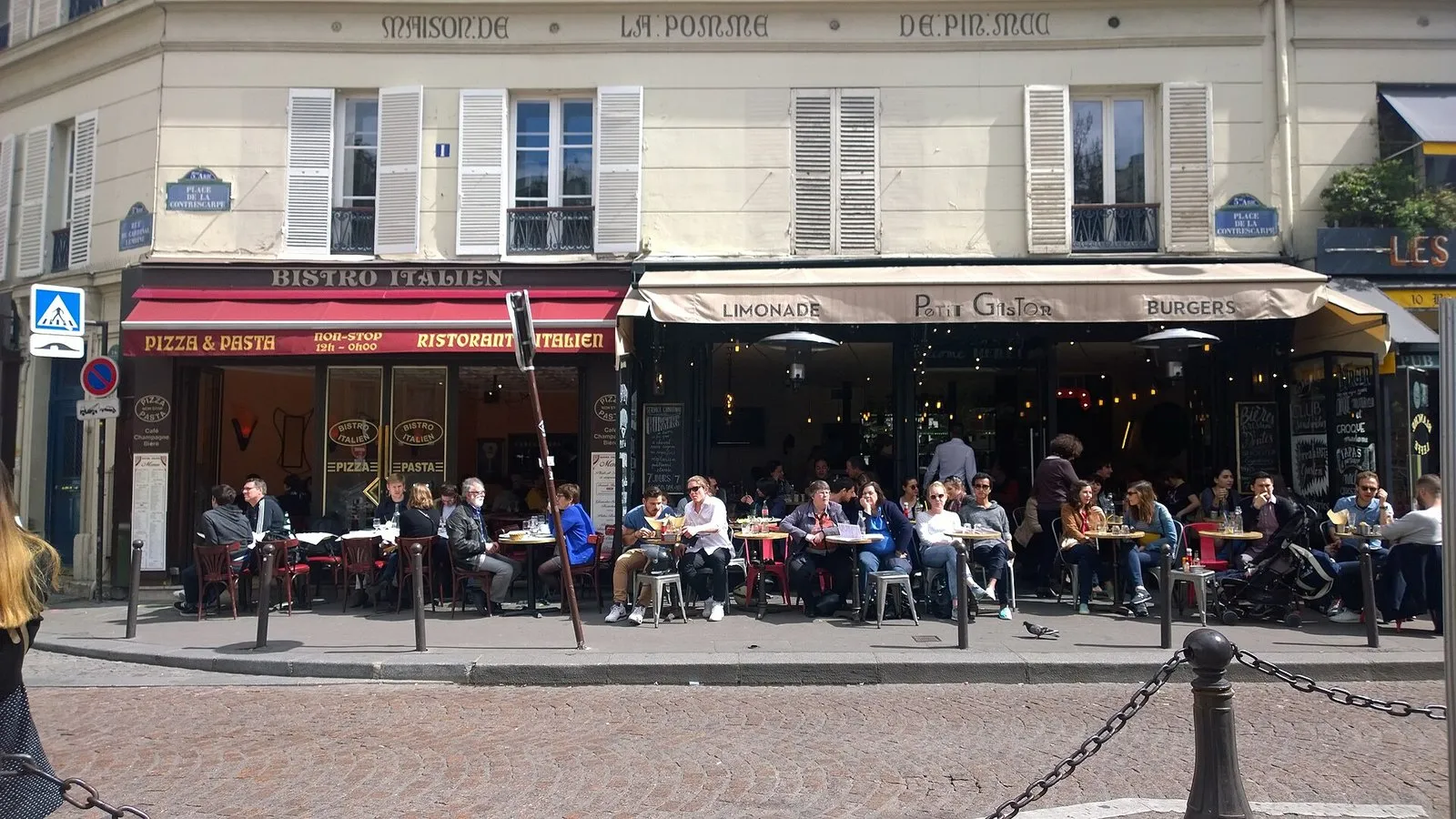
Photo: 4net, CC BY 3.0, via Wikimedia Commons

More recently the square has turned up in searches for “Bohemian Rhapsody”. On 10 July 2025 the pianist Julien Cohen staged a flash mob here for the song’s fiftieth anniversary: about thirty singers and musicians took part, some from the windows of the surrounding buildings, and the video went viral. It is a street performance, not a clip made by Queen.
The square’s trees have had a short history too: the four paulownias were felled because of pathogens linked to rubbish and rats, and replaced in 2022 and again in 2025.
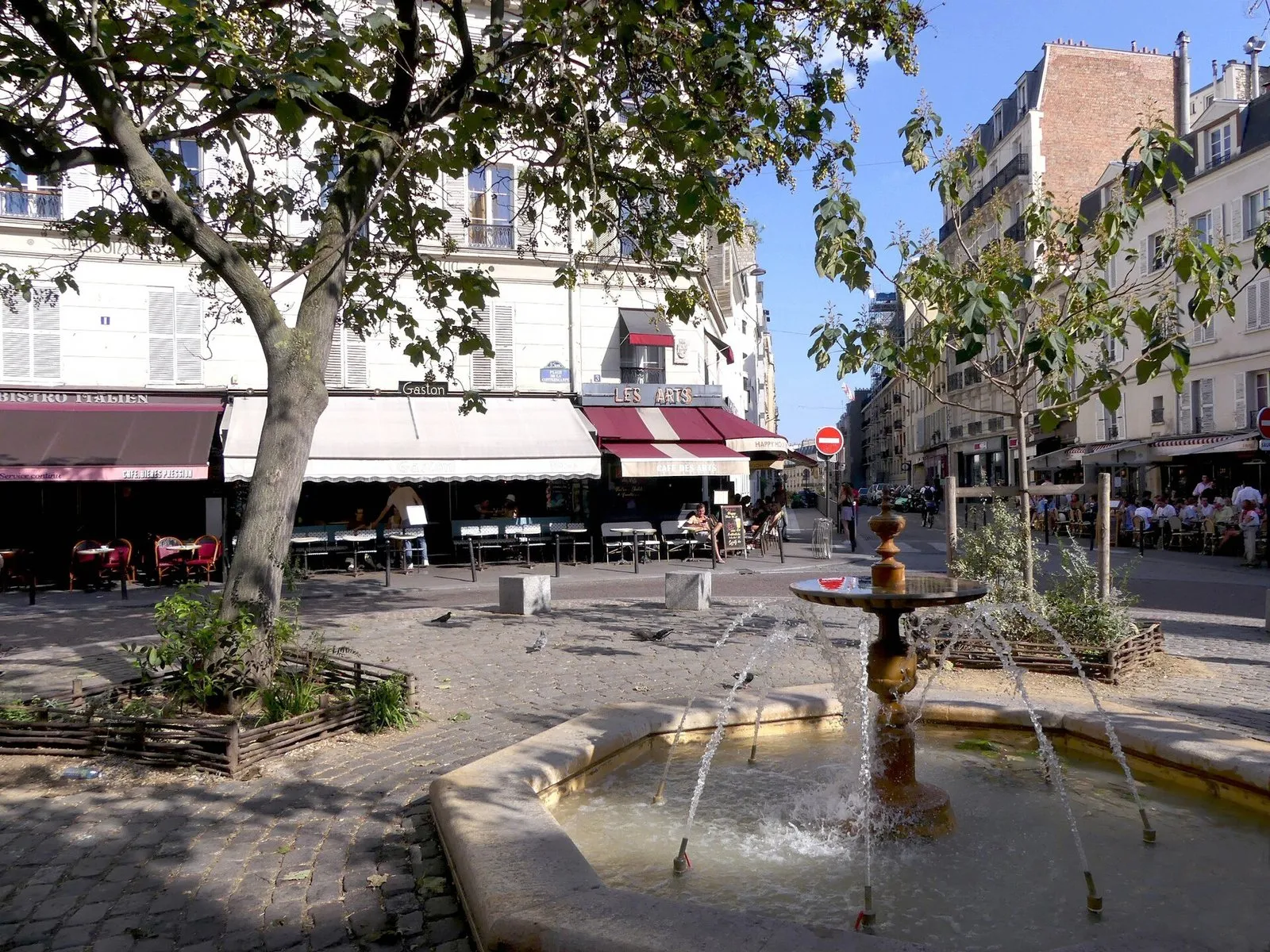
Photo: Florian Pépellin, CC BY-SA 4.0, via Wikimedia Commons

Getting there
Three metro stations serve the square, none of them on it. Place Monge (line 7) is about 272 metres away and Cardinal Lemoine (line 10) about 274 metres, both as the crow flies; Jussieu (lines 7 and 10) is about 427 metres away. By the site’s method (direct distance × 1.3, at 80 metres a minute), the first two are a walk of about four to five minutes.
Choosing your moment
The square is public and always accessible. The City of Paris publishes no hours because there are none, and the renovation of 2016 to 2017, which removed the chains and hedges that blocked the middle of the square, left it a pedestrian space in a 30 km/h zone. Wikipedia notes the many cafés around it, so the evenings are the busier hours, and a morning visit is the quieter way to see the fountain and the facades. Because the sources we hold say nothing about noise or crowds, we leave it there.
The streets that meet here
Two streets lead out of the square and tell most of its story. Rue Mouffetard, which starts at the square, is 650 metres long and 7 metres wide, according to Wikipedia, and follows a road created in the late Roman Empire to link the bridge of the Île de la Cité to the necropolis of the future faubourg Saint-Marcel. Along it, no. 69 is “Le Vieux Chêne”, a ballroom of 1864, and no. 122 carries the sign “À la bonne source”, which is protected as a historic monument. The church of Saint-Médard stands at no. 141. A daily market fills the lower end of the street.
Rue du Cardinal-Lemoine, on the other side, is 680 metres long and between 12 and 20 metres wide. It takes its name from Cardinal Jean Lemoine (1250–1313), whose college, founded in 1302, stood on the ground. In 1868 it absorbed two older streets, rue des Fossés-Saint-Victor and rue de la Contrescarpe. Wikipedia lists a short series of addresses: Paul Verlaine lived at no. 2 from August 1870 to August 1871; no. 47 is the Hôtel Le Brun of 1701, where Watteau and Buffon lived; no. 65 holds the Collège des Écossais, which dates from 1662; Blaise Pascal lived at no. 67 in 1662; James Joyce lived at no. 71; and Hemingway and Hadley lived at no. 74.
What the square has lost
At no. 12, the sign of the former coffee shop “Au Nègre joyeux” was taken down in 2018 because it was judged racist and colonial. The building has belonged to the City of Paris since 1988, and the sign is now shown at the Musée Carnavalet. In the eighteenth century, according to Wikipedia, a barracks of the Gardes françaises stood at no. 36 rue Mouffetard.
Combining the square with other visits
Distances are as the crow flies from the square, with walking times by the site’s method.
- Rue Mouffetard: 113 metres, about 2 minutes.
- Arènes de Lutèce: 224 metres, about 4 minutes.
- Saint-Étienne-du-Mont: 302 metres, about 5 minutes.
- Panthéon: 327 metres, about 5 minutes.
- Grand Mosque of Paris: 485 metres, about 8 minutes.
- Natural History Museum: 559 metres, about 9 minutes.
- Sorbonne: 699 metres, about 11 minutes.
- Institut du Monde Arabe: 747 metres, about 12 minutes.
- Jardin des Plantes: 750 metres, about 12 minutes.
Down rue Mouffetard
Rue Mouffetard falls away from the square, and Wikipedia mentions several details along it: at no. 134 a painted façade in sgraffito of about 1930, and at no. 141 the church of Saint-Médard, of the fifteenth century and listed since 1906. The street appears in Victor Hugo’s “Les Misérables” and in Orwell’s “Down and Out in Paris and London”, and in the films “Amélie” and “Julie & Julia”. It is a walk downhill and the way back is uphill.
Sleeping around the square
Distances here are as the crow flies from the point we hold for the square. The nearest of the 110 hotels are the Hôtel des Grandes Écoles, about 119 metres away, the Hôtel Apolonia Paris Mouffetard, about 128 metres, and the Hôtel des Nations Saint-Germain, about 197 metres. Next come the Hôtel Monge, about 222 metres, and the Hôtel des Arènes, about 224 metres; the Arènes de Lutèce have their own page. The block below lists the others, and the whole hillside is covered in our page on hotels near rue Mouffetard.
For the district as a whole, start from the Latin Quarter guide and the Latin Quarter map; for a table, see where we eat in the Latin Quarter.
History and distinctive features
- The name comes from the former rue de la Contrescarpe-Saint-Marcel. A contrescarpe is the outer slope of the ditch that ran along Philippe Auguste’s city wall, and the square marks the forward work of that wall’s porte Saint-Marcel. Source : fr.wikipedia.org
- The square was opened only in 1852, by demolishing a block of houses between rue du Cardinal-Lemoine, rue Lacépède and rue Mouffetard. For a time it was called place Lacépède. Source : fr.wikipedia.org
- The Pomme de Pin cabaret, praised by Rabelais and frequented by the poets of the Pléiade, stood at the corner of rue Mouffetard and the old rue de la Contrescarpe-Saint-Marcel. According to Hillairet, quoted by Wikipedia, the Gothic inscription at no. 1 is wrong. Source : fr.wikipedia.org
- The square was renovated in 2016–2017, when the chains and hedges that kept people from its centre were removed. It remains in a 30 km/h zone. Source : fr.wikipedia.org
Hotels near the place de la Contrescarpe
Other hotels
- Hôtel des Grandes Écoles ★★★ 2 min walk · 150 m
- Hôtel Apolonia Paris Mouffetard ★★★ 2 min walk · 150 m
- Hôtel des Nations Saint Germain ★★★ 3 min walk · 250 m
- Hôtel Monge ★★★★ 4 min walk · 300 m
- Hôtel des Arènes ★★★ 4 min walk · 300 m
- Best Western Quartier Latin Panthéon ★★★ 4 min walk · 300 m
Within 600 m as the crow flies, nearest first. Walking times are estimates: straight-line distance × 1.3, at 80 metres a minute, to the station, not to a specific exit.
Frequently asked questions
Which metro station is closest to the place de la Contrescarpe?
Place Monge on line 7, about 272 metres away, and Cardinal Lemoine on line 10, about 274 metres, both as the crow flies. Jussieu (lines 7 and 10) is about 427 metres away.
Is the Bohemian Rhapsody scene from a film shot on the place de la Contrescarpe?
No. The video is a flash mob staged on the square on 10 July 2025 for the fiftieth anniversary of the Queen song. It is neither an official Queen video nor a scene from the 2018 film.
Did Hemingway live on the place de la Contrescarpe?
Not on the square itself. He lived with Hadley from August 1922 to January 1923 at 74 rue du Cardinal-Lemoine, a few steps away, where a plaque quotes “A Moveable Feast”.
Is the square noisy in the evening?
We have no noise data for it. Wikipedia notes many cafés around the square, so ask the hotel whether your room faces it before you book.
Why is the square called the centre of the 5th?
It lies at the meeting point of the four administrative quarters of the arrondissement: Saint-Victor, Jardin-des-Plantes, Val-de-Grâce and Sorbonne.
Where can I eat nearby?
Our list of checked addresses in the district is on the page about restaurants in the Latin Quarter. We name no café of the square here, because none of them met our sourcing test.
How long is rue Mouffetard?
650 metres long and 7 metres wide, according to Wikipedia. It begins at the place de la Contrescarpe.
Who lived on rue du Cardinal-Lemoine?
Wikipedia lists Paul Verlaine at no. 2 (1870–1871), Blaise Pascal at no. 67 (1662), James Joyce at no. 71 and Ernest Hemingway with Hadley at no. 74 (August 1922 to January 1923).
What was the Au Nègre joyeux sign?
The sign of a former coffee shop at no. 12, taken down in 2018 because it was judged racist and colonial. The City of Paris, which owns the building, shows it at the Musée Carnavalet.
How far is the Panthéon from the place de la Contrescarpe?
About 327 metres as the crow flies, or roughly five minutes on foot.