Our guides
The Sorbonne, Paris
The Sorbonne in the Latin Quarter — guided visits by reservation only, three building campaigns from 1253 to 1884, metro access and seven hotels within 150 m. Checked October 2026.
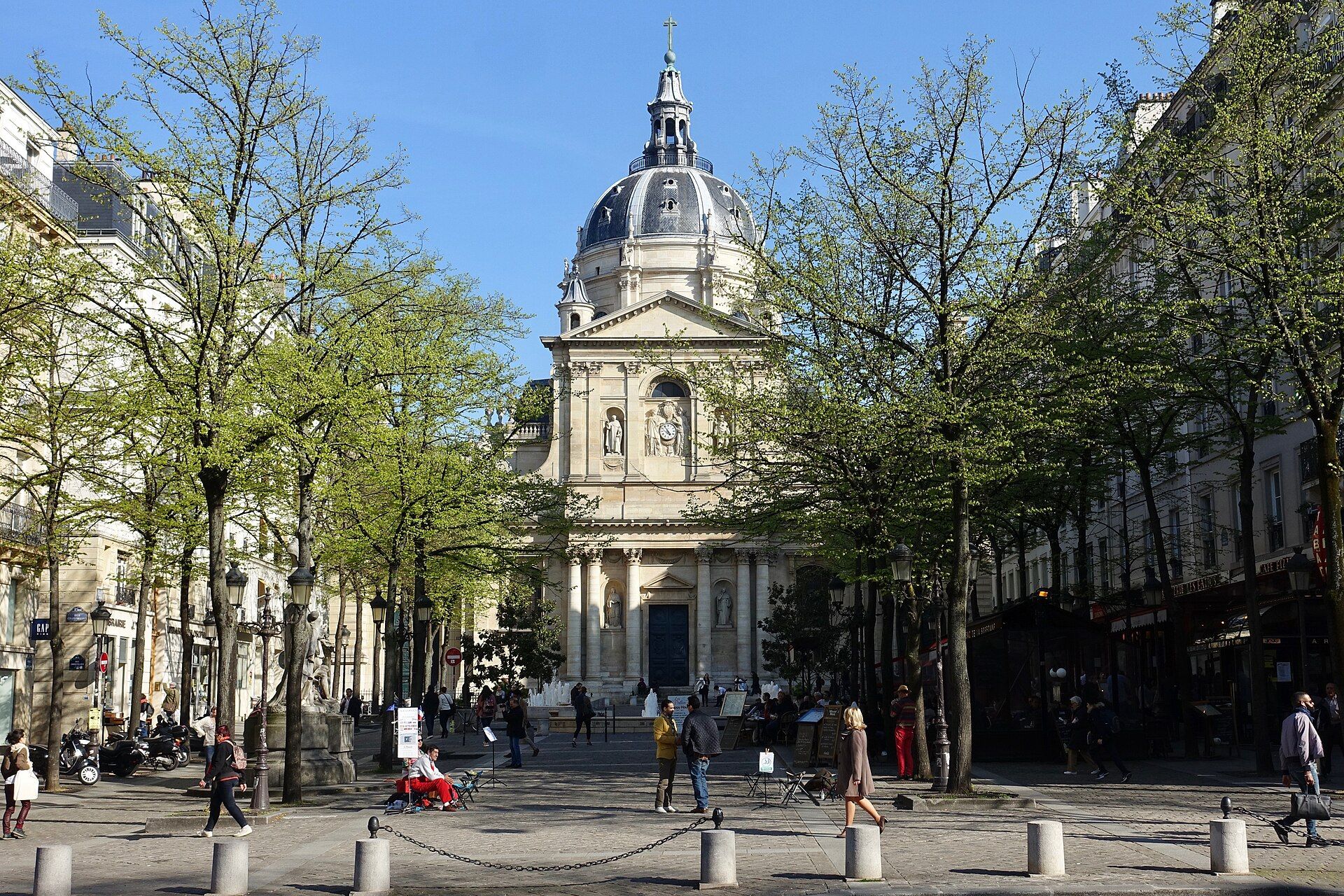
© Guilhem Vellut, CC BY 2.0 — Wikimedia Commons

A college that became a palace
The Sorbonne is known as a single name, yet the building has had three lives. A college was founded about 1250 by Robert de Sorbon, chaplain to Louis IX, for poor theology students. Its first building dates from 1253; the second, built under Richelieu from 1635, was designed by Jacques Lemercier; the third, begun in 1884 by Henri-Paul Nénot, is the university palace you see on rue des Écoles. The college itself was dissolved in 1793.
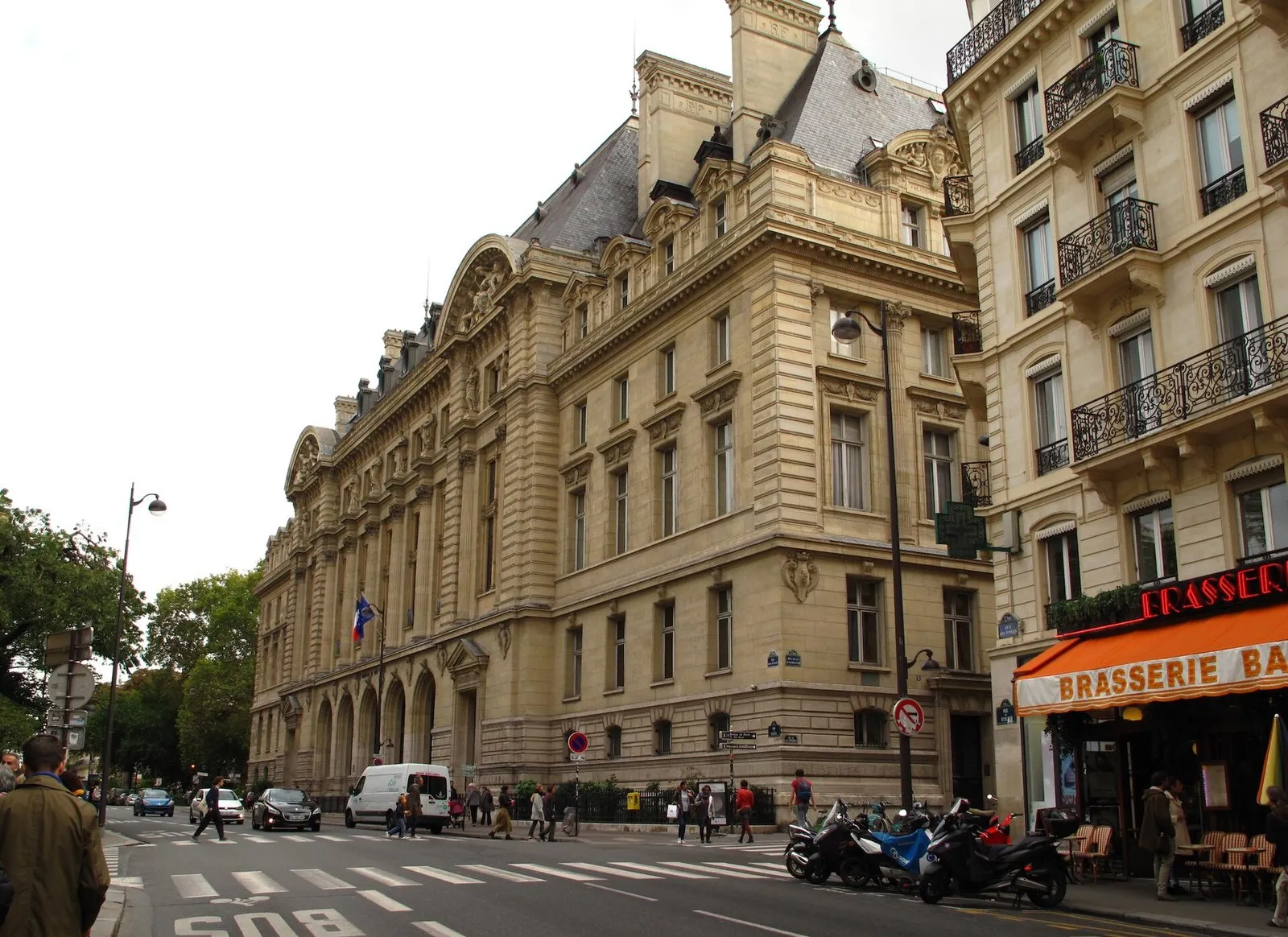
Photo: Rutger van der Maar, CC BY 2.0, via Wikimedia Commons

Today the palace is shared. The Chancellerie des universités, Paris 1 Panthéon-Sorbonne, Sorbonne Université and Sorbonne Nouvelle all have seats in it.
Seeing it, and what stays closed
From the place de la Sorbonne you can see the façade and the courtyards. Going inside is another matter. The building is a university, not a museum: there are no opening hours and no free access. The only way in is a guided visit of the academic palace, offered all through 2026 by the Chancellerie des Universités de Paris, on reservation only. The chapel, the library and the university areas are not part of it.
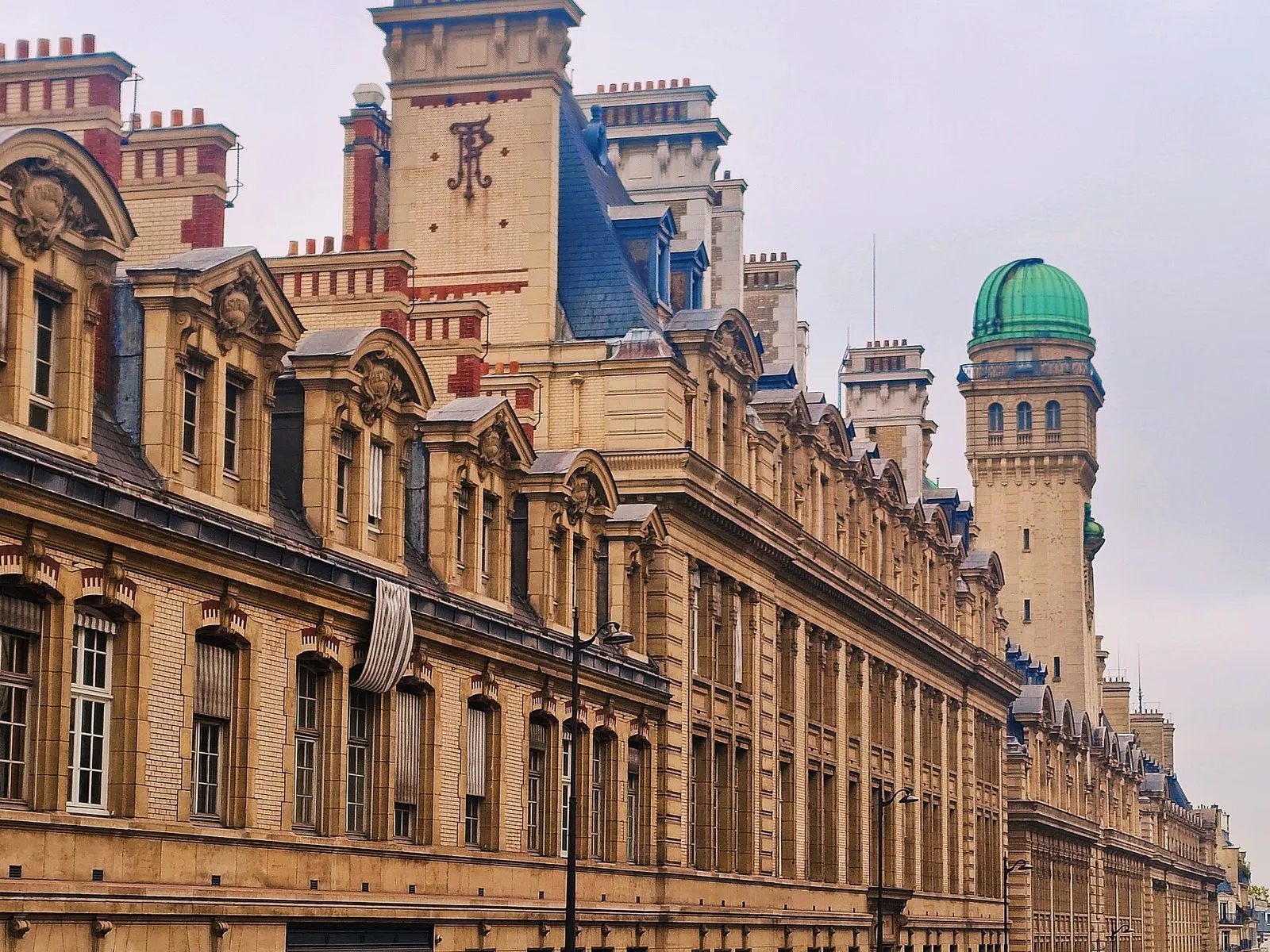
Photo: New York-air, CC BY-SA 4.0, via Wikimedia Commons

We found no published price for these visits and no list of slots on the City of Paris page, which points to the reservation link instead. Treat the booking page as the only source for dates and cost.
Around the Sorbonne
Measured from 47 rue des Écoles, the Cluny Museum is about 124 metres away and the Panthéon about 400 metres, as the crow flies; for the district as a whole, see the Latin Quarter guide and the Latin Quarter map.
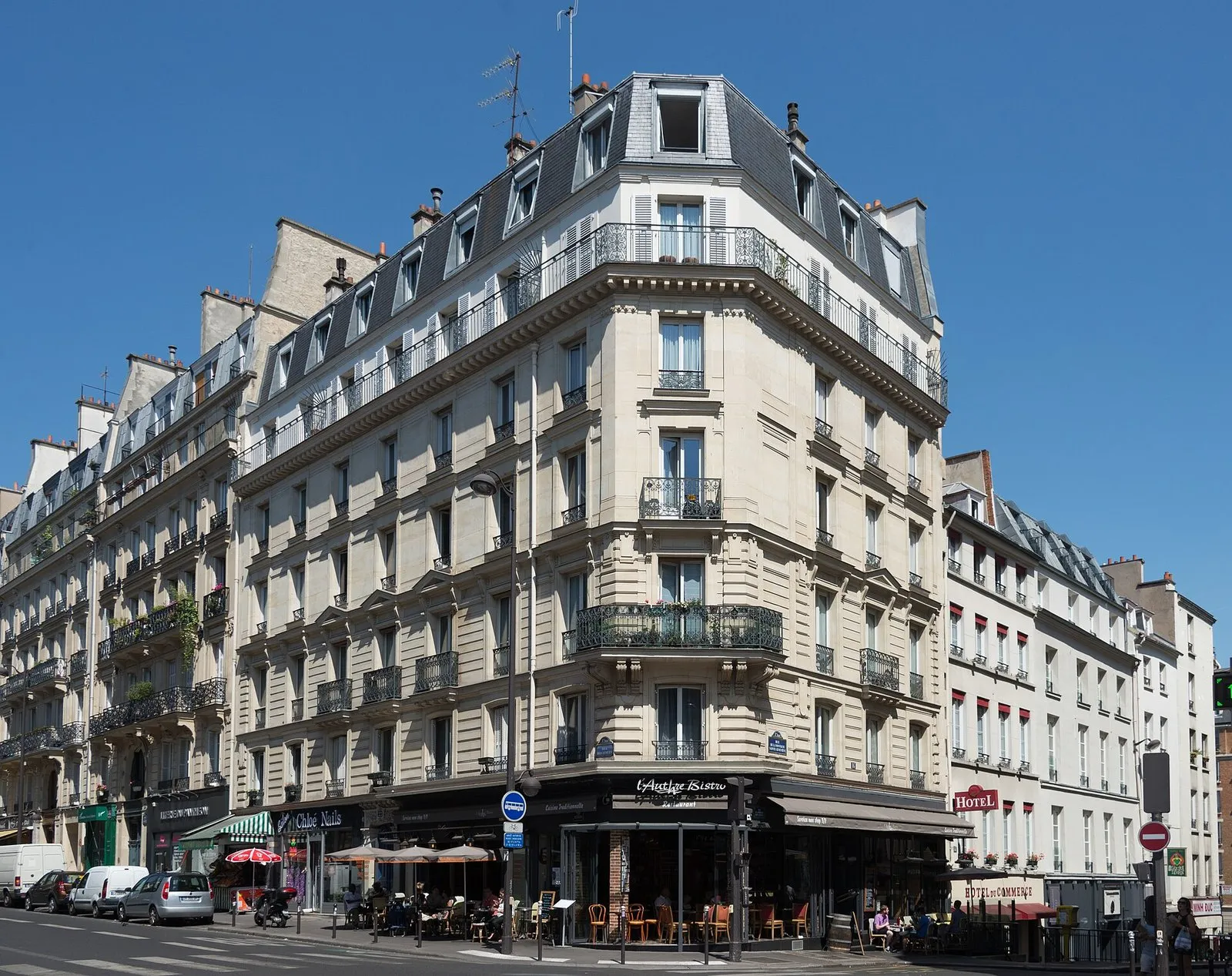
Photo: xiquinhosilva, CC BY 2.0, via Wikimedia Commons

Metro access has changed in 2026. Saint-Michel station on line 4 is closed until 19 December, so Cluny – La Sorbonne on line 10 is the station to use, about 156 metres from the building.
Getting there
Cluny – La Sorbonne (line 10) is the closest station, about 156 metres from the building, which makes it the natural arrival point: the walk is about 3 minutes by our method, which multiplies the straight line by 1.3 and walks at 80 metres a minute. Maubert – Mutualité (line 10) is 291 metres away and Odéon (lines 4 and 10) 371. The building faces the place Paul-Painlevé and the Cluny Museum, on the rue des Écoles.
What to look at from the street
The visit starts outside, and most of it stays there.
- The chapel. The chapel of Sainte-Ursule, by Jacques Lemercier (1635–1642), holds the tomb of Cardinal Richelieu. It is the only part of the Old Regime buildings to survive, and it has been listed as a historic monument since 1887.
- The façade. Henri-Paul Nénot rebuilt the whole complex between 1885 and 1901 as a palace of the sciences and letters; the grand amphitheatre and the façades have been listed since 1975.
- The observatory. A two-domed astronomical tower is built into the former science faculty, and shows above the roofline.
- The amphitheatre. It holds Puvis de Chavannes’s “Le Bois sacré” (1889), a symbolist mural made for university ceremonies. It is part of the interior, so it is seen only if a guided visit includes it, which the listing we read does not say.
When a visit is possible
The university shares the building with the Chancellerie and several other institutions, and Wikipedia states that only students, staff and library readers have regular access. The public sees the inside during the Journées européennes du patrimoine, and the guided visits of the Chancellerie des Universités de Paris offered throughout 2026 on reservation. Book through the link on the City of Paris listing, since it is the only source for slots and cost.
One name, several institutions
Sorbonne Université, the Université Paris 1 Panthéon-Sorbonne, the École pratique des hautes études and the library of the Sorbonne all have their seats in the building. That is why “the Sorbonne” on a diploma and “the Sorbonne” on a street plan do not always refer to the same body.
On 3 May 1968, the first riot of that May began after the police entered the courtyard of the Sorbonne, according to Wikipedia.
The long view
The Sorbonne has been rebuilt twice since the thirteenth century, and each campaign left a layer that can still be read. The chapel is the seventeenth-century layer, commissioned under Richelieu, who had been head of the college since 1622. The rest is the late nineteenth-century layer, which turned a cluster of old buildings into one palace on the rue des Écoles. Seen together, the dome of the chapel and the long façade of Nénot show two different ideas of what a university should look like.
Combining it with
The distances are straight lines computed from the coordinates in our data; times follow our method.
| Place | Distance | On foot |
|---|---|---|
| Cluny Museum | 125 m | 2 min |
| Saint-Séverin | 248 m | 4 min |
| Rue de la Huchette | 385 m | 6 min |
| Shakespeare and Company | 387 m | 6 min |
| Saint-Étienne-du-Mont | 398 m | 6 min |
| Panthéon | 425 m | 7 min |
| Notre-Dame | 502 m | 8 min |
| Luxembourg Gardens | 599 m | 10 min |
Cluny is the shortest hop, and the museum and the university face one another across the square, so they fit into one morning.
Where to sleep nearby
Several hotels of our database stand within 150 metres of the building, as the section below shows. Our list of hotels near the Sorbonne ranks them, and the Latin Quarter map shows how the quarter fits together.
Hotels within a short walk
The hotels closest to 47 rue des Écoles, the Sorbonne’s address, measured as the crow flies, are the Hôtel Korner Sorbonne, about 70 metres away, the Hôtel Central Saint-Germain, 92 metres, the Mercure Paris La Sorbonne Saint-Germain-des-Prés, 94 metres, and the Mercure Paris Notre-Dame Saint-Germain-des-Prés, 95 metres. The Hôtel de Suez follows at 121 metres. The block below measures instead from the point we hold for the Sorbonne on the place de la Sorbonne, so its figures differ from these; our page on hotels near the Sorbonne compares them.
History and distinctive features
- The Collège de Sorbonne was founded in the 1250s by Robert de Sorbon, chaplain to King Louis IX, for poor students of theology; it was dissolved in 1793. Source : fr.wikipedia.org
- The buildings went up in three campaigns: 1253 for the first college, 1635 under Richelieu to the designs of Jacques Lemercier, and 1884 to those of Henri-Paul Nénot. Source : fr.wikipedia.org
- Several institutions sit in the building today: the Chancellerie des universités, Paris 1 Panthéon-Sorbonne, Sorbonne Université and Sorbonne Nouvelle. Source : fr.wikipedia.org
Hotels near the Sorbonne
Other hotels
- Select Hôtel Rive Gauche ★★★★ 1 min walk · 50 m
- Hôtel Design Sorbonne ★★★ 1 min walk · 100 m
- Hôtel Cluny-Sorbonne Not classified by Atout France 1 min walk · 100 m
- Hôtel Salvia ★★★★ 1 min walk · 100 m
- French Theory ★★★ 1 min walk · 100 m
- Hôtel Grand Cœur Latin ★★★★ 1 min walk · 100 m
Within 600 m as the crow flies, nearest first. Walking times are estimates: straight-line distance × 1.3, at 80 metres a minute, to the station, not to a specific exit.
Frequently asked questions
Can you visit the Sorbonne?
Only on a guided visit of the academic palace, booked in advance; the Chancellerie des Universités de Paris offers them through 2026. There is no free visit, and the chapel and library are not open to visitors.
How much does a visit of the Sorbonne cost?
The City of Paris page does not give a price, and we have not seen one elsewhere in our sources. Use the official reservation link and read the price there.
Where is the Sorbonne?
At 47 rue des Écoles, in the 5th arrondissement, on the place de la Sorbonne; the nearest station is Cluny – La Sorbonne on line 10, about 156 metres away.
Is the Sorbonne a single university?
No. Its buildings house the Chancellerie des universités, Paris 1 Panthéon-Sorbonne, Sorbonne Université and Sorbonne Nouvelle.
How old is the Sorbonne?
The college dates from the 1250s, founded by Robert de Sorbon; the palace you see today is the work of the campaign begun in 1884, which followed those of 1253 and 1635.
How far is the Sorbonne from the Panthéon?
About 400 metres in a straight line from 47 rue des Écoles, according to the coordinates in our database.
Who founded the Sorbonne?
Robert de Sorbon, chaplain to Louis IX, founded a college in 1253 for poor theology students. The college was dissolved in 1793, and the present palace is the work of Henri-Paul Nénot, between 1885 and 1901.
Where is Richelieu buried?
In the chapel of Sainte-Ursule, in the Sorbonne. The chapel is the only part of the Old Regime buildings that survives.
Which painting is in the grand amphitheatre?
“Le Bois sacré”, by Puvis de Chavannes, dated 1889. It is a symbolist mural; the amphitheatre is used for the great university ceremonies.
Can I enter the Sorbonne during the heritage days?
Wikipedia says the public visits take place during the Journées européennes du patrimoine. We have not checked the 2026 programme, so confirm the dates with the organisers.
How far is the Sorbonne from Notre-Dame?
About 502 metres in a straight line, or 8 minutes on foot by our method. Saint-Séverin and the Cluny Museum lie between the two.
Which metro station is nearest the Sorbonne?
Cluny – La Sorbonne on line 10, about 156 metres away. Maubert – Mutualité, also on line 10, is 291 metres away.
Can I visit the chapel of the Sorbonne?
Not on its own. The listing we read says that the chapel, the library and the university areas cannot be visited, and that the guided visits of the academic palace are by reservation only.