Our guides
Latin Quarter, Paris
A guide to the Latin Quarter of Paris — where it is, why it is called Latin, its universities, climate, metro links to the Louvre and airports, and where to stay. Checked October 2026.
What the name covers
The Latin Quarter is the historic district of the universities on the Left Bank. It owes its name to Latin, the language of the students until the Revolution, and it is among the most touristy parts of Paris, with narrow streets between boulevard Saint-Germain and the Seine. The 5th arrondissement, whose official name is “arrondissement du Panthéon”, has lost a third of its population since 1968, but the district remains very much a student one: the historic Sorbonne building houses the Chancellerie, Paris 1 Panthéon-Sorbonne, Sorbonne Université and Sorbonne Nouvelle, and the quarter also has the École normale supérieure, the Collège de France, the ESPCI, the Jussieu campus and the lycées Louis-le-Grand and Henri-IV.
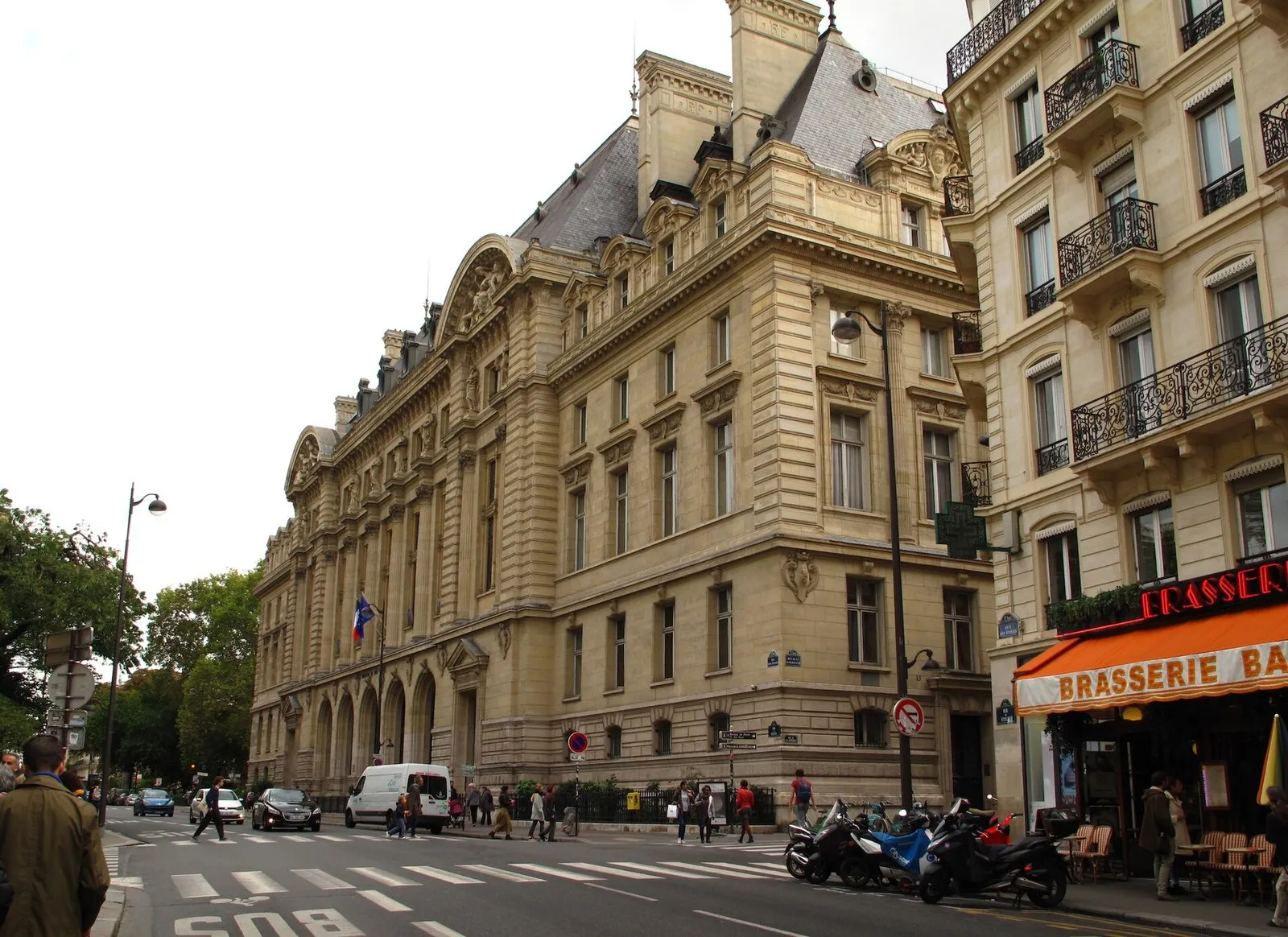
Photo: Rutger van der Maar, CC BY 2.0, via Wikimedia Commons

In the Middle Ages the University occupied the Left Bank, the merchants’ city the Right Bank and the Cité the island.
Where to start
- Churches and old stones. Notre-Dame, across the river; Saint-Séverin; Saint-Étienne-du-Mont; and the Cluny Museum.
- Books. Shakespeare and Company and the bouquinistes, with the literary cafés.
- Learning. The Sorbonne and the Panthéon.
- Gardens. The Luxembourg Gardens and the Jardin des Plantes, then the Grand Mosque and the Institut du monde arabe.
- Streets and markets. Rue Mouffetard, the place de la Contrescarpe and the rue de la Huchette. For the geography, see our map of the Latin Quarter.
- Evenings. The Caveau de la Huchette for jazz; the 5th also has at least a dozen independent art-house cinemas, among them Le Champo, la Filmothèque, the Reflet Médicis, the Grand Action and the Studio Galande, where Rocky Horror plays on Fridays and Saturdays. See also the things to do.
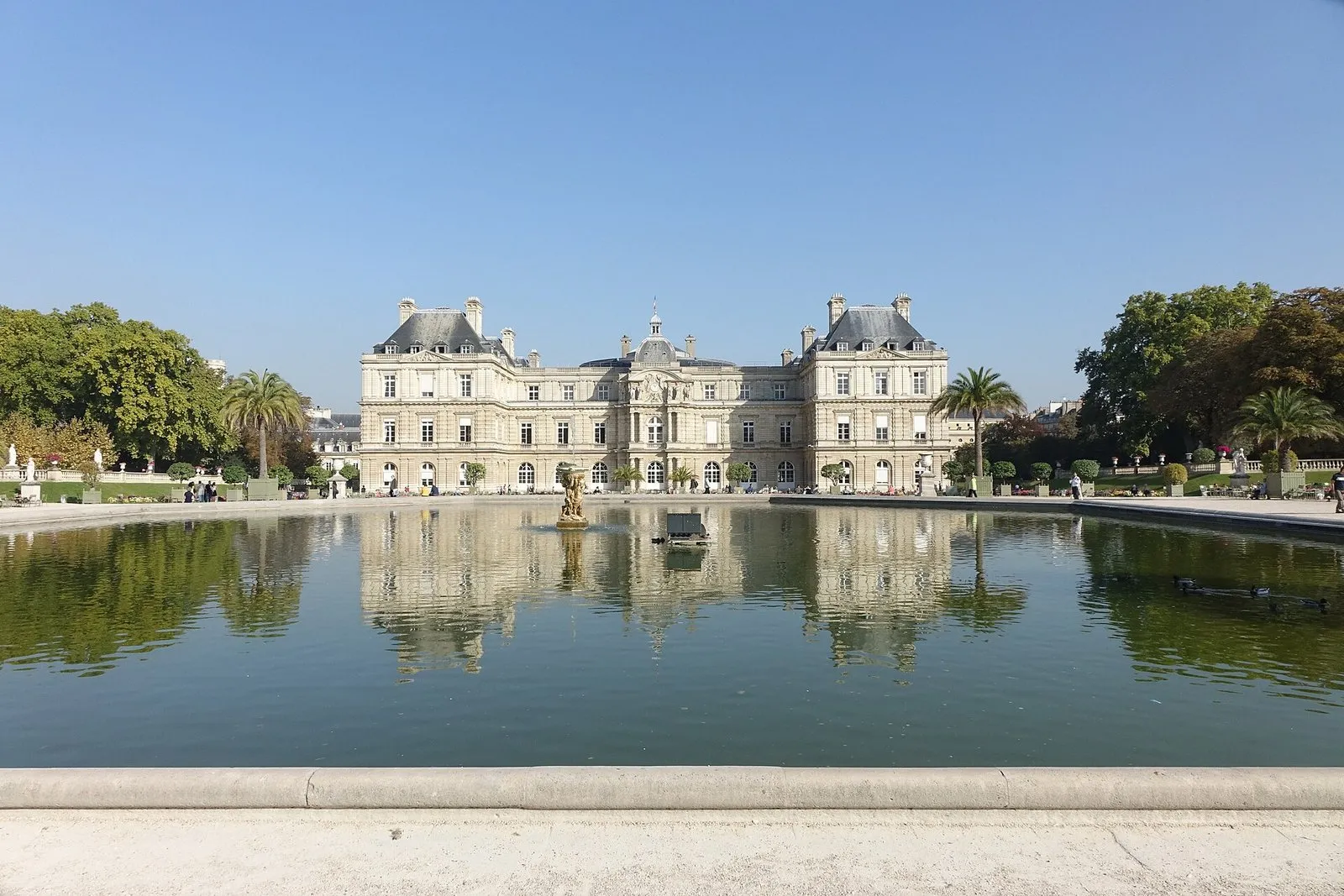
Photo: 최광모, CC BY-SA 4.0, via Wikimedia Commons

Moving around
Line 7 is the direct way to the Louvre. For Versailles, the RER C leaves from Saint-Michel Notre-Dame; for Orly, the RER B to Antony and Orlyval, or line 14. Saint-Michel on line 4 is closed from 14 September to 19 December 2026; its RER platforms stay open, as do Cluny – La Sorbonne and Maubert – Mutualité on line 10 (Paris.fr, read on 4 October 2026).
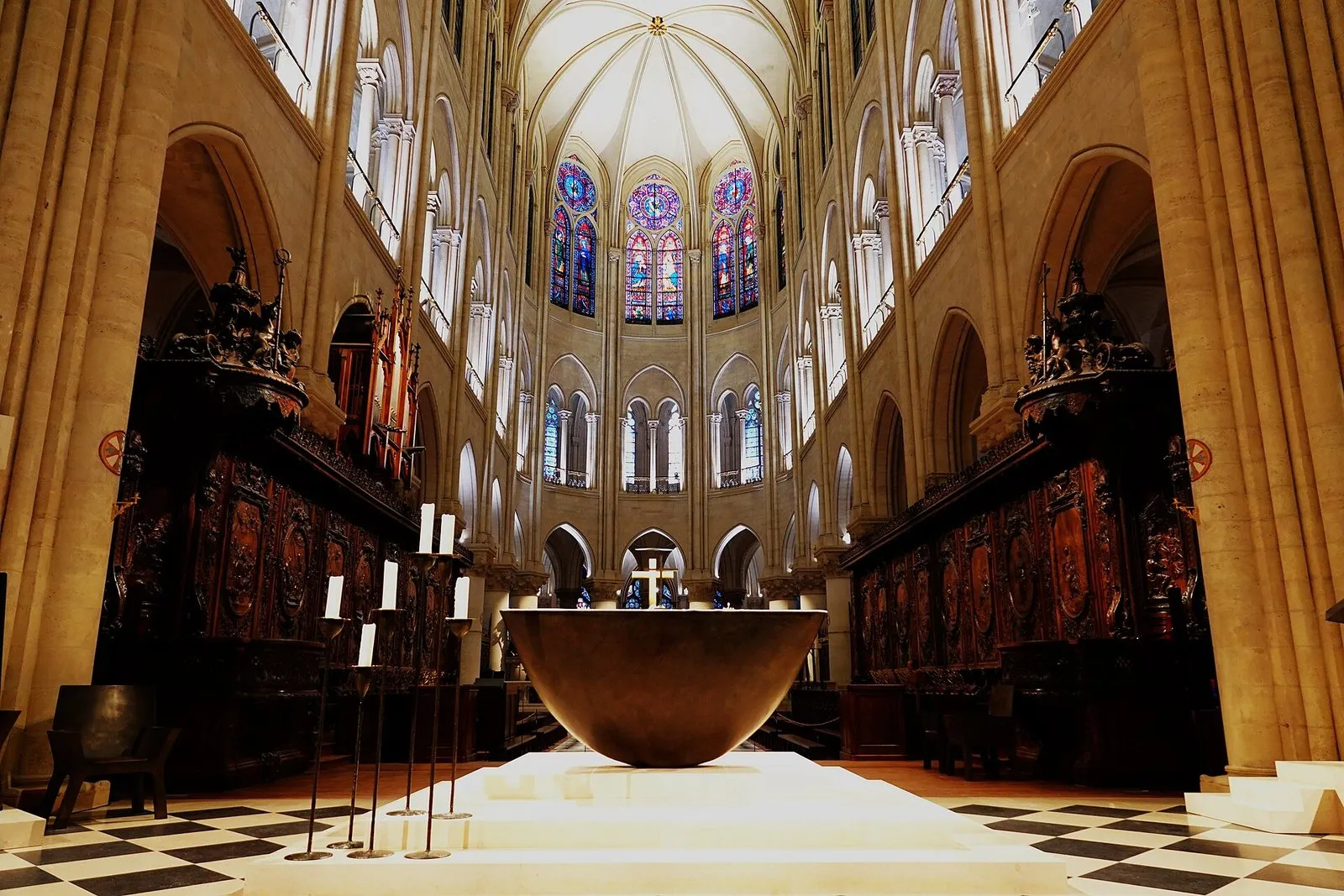
Photo: Ibex73, CC BY 4.0, via Wikimedia Commons

The four quartiers of the 5th
The administrative map is finer than the name “Latin Quarter”. According to Wikipedia, the 5th arrondissement has four official quartiers: Saint-Victor (17), Jardin-des-Plantes (18), Val-de-Grâce (19) and Sorbonne (20). The arrondissement has an area of 2.54 square kilometres and is bordered by the Seine and the 4th to the north, the 6th to the west, and the 14th and 13th to the south. Its present limits date from 1860, after the law of 16 June 1859 extending the city. The town hall is at 21 place du Panthéon. Two of them take their names from sights we describe: the Sorbonne, for the quartier numbered 20, and the Jardin des Plantes, for the one numbered 18. Wikipedia lists, as the main sights of the arrondissement, the Panthéon, the Jardin des Plantes, the Arènes de Lutèce and the Cluny museum, and as museums the Natural History Museum, the Institut du Monde Arabe, the Curie Museum and the Police Prefecture museum.
Three walks, with the distances
The distances are as the crow flies between points in our data, and the walking times follow the site’s method (direct distance × 1.3, at 80 metres a minute).
The hill. Panthéon, then Saint-Étienne-du-Mont 155 metres away, the place de la Contrescarpe 302 metres further, and the Arènes de Lutèce 224 metres beyond: 680 metres in all, about 11 minutes of walking between the four.
The river side. Notre-Dame, then Shakespeare and Company 139 metres away, rue de la Huchette 113 metres further, Saint-Séverin 137 metres beyond, and the Cluny Museum 197 metres after that: 586 metres in all, about 10 minutes. The bouquinistes line the quay next to the first stop.
The gardens. The Grand Mosque, the Natural History Museum 106 metres away, the Jardin des Plantes 308 metres further, the Ménagerie 179 metres beyond, and the Institut du Monde Arabe 453 metres after that: 1,046 metres in all, about 17 minutes.
Eating, drinking and the evening
The district’s food and nightlife have their own pages. The cafés and the literary cafés are listed with their hours, the bars and jazz with their prices, and the restaurants with the sources we found. The Grand Mosque’s tea room and the Institut du Monde Arabe’s panoramic restaurant are described on their own pages, and rue de la Huchette combines a theatre and a jazz cellar on 164 metres of street. The district’s history, from Roman Lutetia to 1968, is told in our history of the Latin Quarter.
The university today
The Sorbonne is the district’s anchor. Wikipedia counts three universities in the buildings: Sorbonne Université, Panthéon-Sorbonne and, partly until 2022, Sorbonne Nouvelle, together with the chancellery of the universities, the Sorbonne library and the École pratique des hautes études. The college was founded in 1253 by Robert de Sorbon, and the chapel, rebuilt for Richelieu between 1635 and 1642, holds his tomb. Henri-Paul Nénot rebuilt the rest between 1885 and 1901; the chapel has been a historic monument since 1887 and the whole since 1975. The International Olympic Committee was founded at the Sorbonne in 1894.
Where to stay
The district has no single centre in our data, so we give no list of the hotels closest to a middle point. To choose by corner of the district, use our lists of hotels near Notre-Dame, Saint-Michel, the Odéon, the Luxembourg Gardens, the Panthéon, rue Mouffetard and the Jardin des Plantes. For the arrondissement as a whole, see hotels in the 5th arrondissement, and for the question of which arrondissement it is, which arrondissement is the Latin Quarter in.
History and distinctive features
- The Latin Quarter is the historic university district of the Left Bank, covering the 5th arrondissement and part of the 6th, around the Sorbonne and the montagne Sainte-Geneviève, opposite the Île de la Cité. Source : fr.wikipedia.org
- In the seventeenth century the University was nicknamed the “pays latin”, after the Latin spoken in teaching; the name “quartier latin” took hold at the end of the eighteenth century. Source : fr.wikipedia.org
- The 5th arrondissement had 55,252 inhabitants in 2023, against 83,721 in 1968, with a density of 21,752.8 inhabitants per km², which implies an area of about 2.54 km² (254 ha). Source : insee.fr
- The official name of the 5th is “arrondissement du Panthéon” (article R2512-1 of the general code of local authorities), a name rarely used. Source : fr.wikipedia.org
- The caveau de la Huchette, at 5 rue de la Huchette, offers jazz and swing every evening. Source : caveaudelahuchette.fr
Hotels near the Latin Quarter
Some links are affiliate links: if you book through them, we may earn a commission, at no extra cost to you. How we are paid
Other hotels
Frequently asked questions
Where is the Latin Quarter in Paris?
On the Left Bank, south of the Seine and opposite the Île de la Cité. It covers the 5th arrondissement and part of the 6th, around the Sorbonne and the montagne Sainte-Geneviève.
Why is it called the Latin Quarter?
Because Latin was the language of teaching at the University, which gave the area the nickname “pays latin” in the seventeenth century; “quartier latin” became the usual name at the end of the eighteenth century.
What is the weather like in the Latin Quarter?
Paris has no separate climate by district. Météo-France’s 1991–2020 normals, from the Paris-Montsouris station in the 14th arrondissement, nearly 3 km south of the Panthéon, give 5.4°C on average in January and 20.9°C in July, with a mean high of 25.7°C in July. Rain totals 634 mm a year, on about 109 days with at least 1 mm. The record is 42.6°C on 25 July 2019.
What are the opening hours of the Latin Quarter?
A district has none: each site keeps its own hours, which we give in the guides to Notre-Dame, the Panthéon, the Cluny Museum and the others. Several sites change their hours with the season.
How do I get to the Louvre from the Latin Quarter?
By line 7, which runs directly from Place Monge, Jussieu or Censier – Daubenton to Palais Royal – Musée du Louvre.
How do I get to the airports and Versailles?
For Versailles, the RER C links Saint-Michel Notre-Dame with Versailles Château Rive Gauche. For Orly, take the RER B to Antony and then Orlyval, or line 14. For the Gare du Nord, line 4 or the RER B leave from Saint-Michel Notre-Dame, though the line 4 platforms there are closed until 19 December 2026.
Is the Latin Quarter good with children?
It offers the Ménagerie and the Grande Galerie de l’Évolution in the Jardin des Plantes, the Luxembourg Gardens and the playground of the Arènes de Lutèce.
What are the four quartiers of the 5th arrondissement?
Saint-Victor (17), Jardin-des-Plantes (18), Val-de-Grâce (19) and Sorbonne (20), according to Wikipedia.
How big is the 5th arrondissement?
2.54 square kilometres, with 55,252 residents in 2023.
How long does a walk through the hill sights take?
About 11 minutes between the Panthéon, Saint-Étienne-du-Mont, the place de la Contrescarpe and the Arènes de Lutèce: 680 metres in all as the crow flies.
Where is the town hall of the 5th?
At 21 place du Panthéon, according to Wikipedia.
Which universities occupy the Sorbonne?
Sorbonne Université and Panthéon-Sorbonne, and, partly until 2022, Sorbonne Nouvelle, according to Wikipedia.
When was the Sorbonne building rebuilt?
Henri-Paul Nénot rebuilt it from 1885 to 1901; the chapel, built for Richelieu between 1635 and 1642, was spared.