Our guides
Panthéon Paris
The Panthéon in the Latin Quarter — winter and summer hours, ticket prices, who enters free, the closed dome and the hotels nearest the place du Panthéon. Checked October 2026.
© Guilhem Vellut, CC BY 2.0 — Wikimedia Commons

A church that became a necropolis
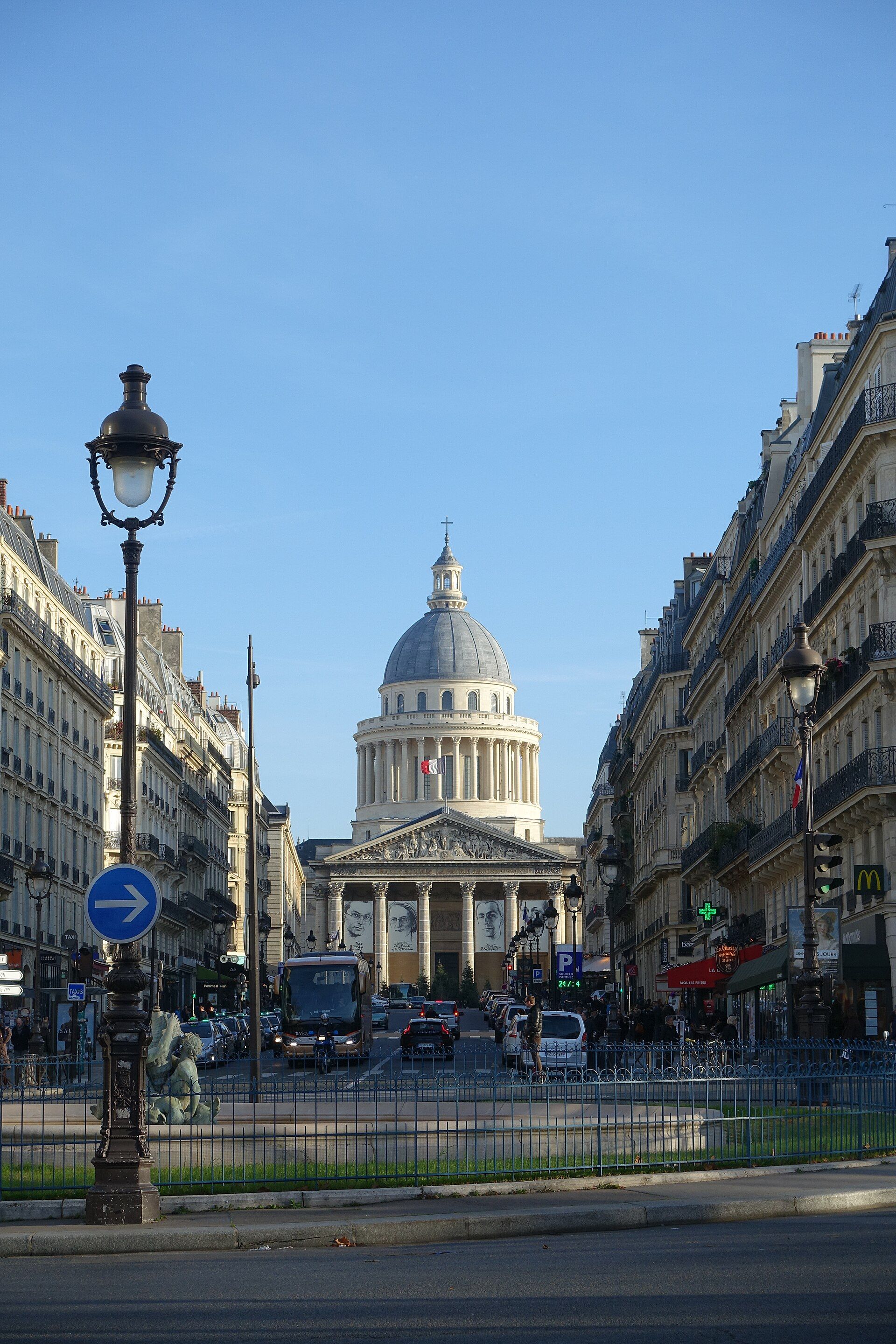
Louis XV vowed to rebuild the church of Sainte-Geneviève, and Soufflot gave it a Greek-cross plan under a triple dome. The Revolution turned the building into a Panthéon for the nation’s “great men”, and the century that followed changed its use six times. Today it stands on the place du Panthéon, in the 5th arrondissement.
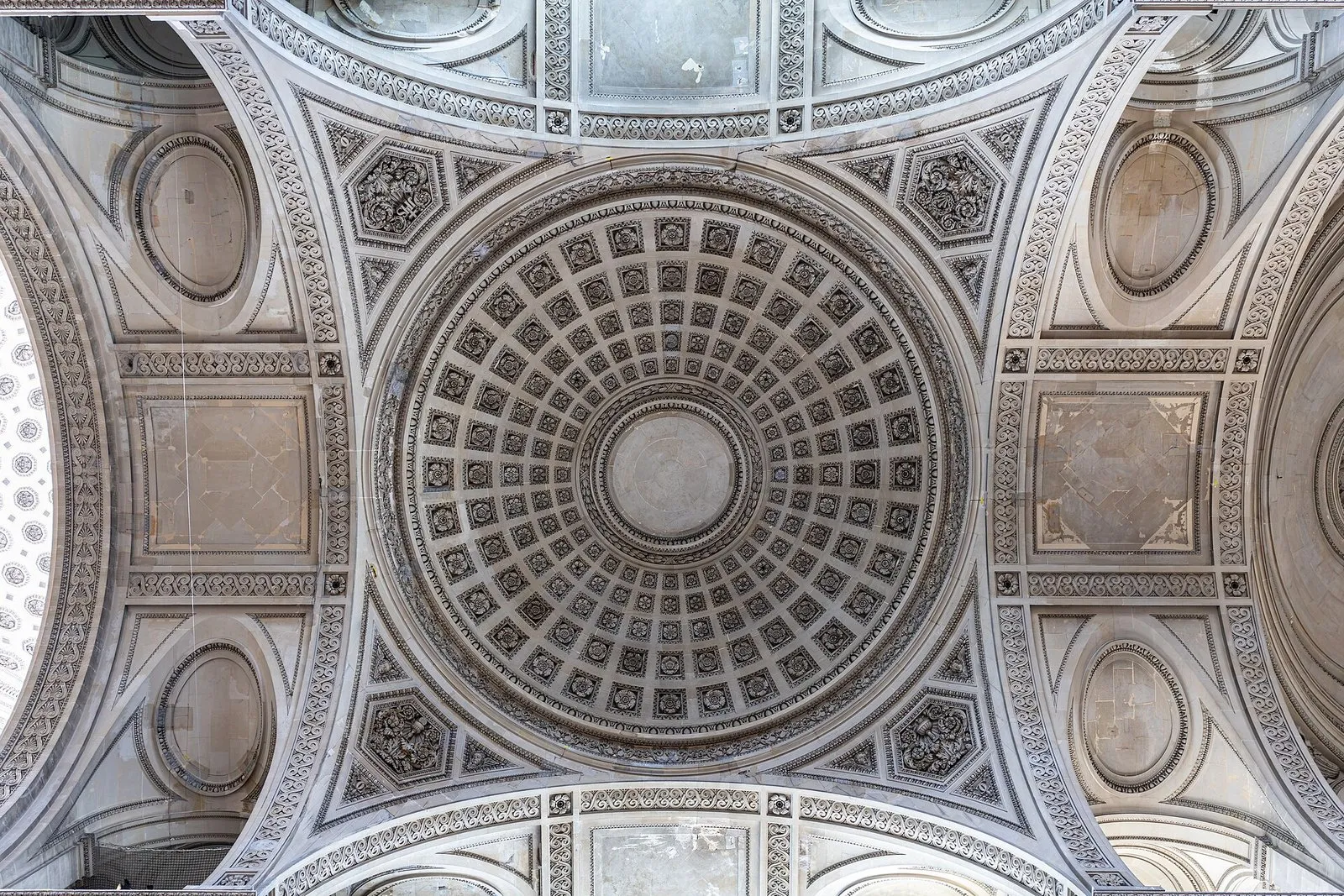
Photo: Matthias Süßen, CC BY-SA 4.0, via Wikimedia Commons

What the 2026 visit includes
- The nave and the crypt. These are what the ticket covers, with audioguides in ten languages.
- The crypt. Its residents range from Voltaire and Rousseau to the most recent inductions; the official site names Missak Manouchian (February 2024) and Robert Badinter (October 2025).
- The dome. Closed. The panorama is not open to visitors, and no date has been given for its return; plan the day without it.
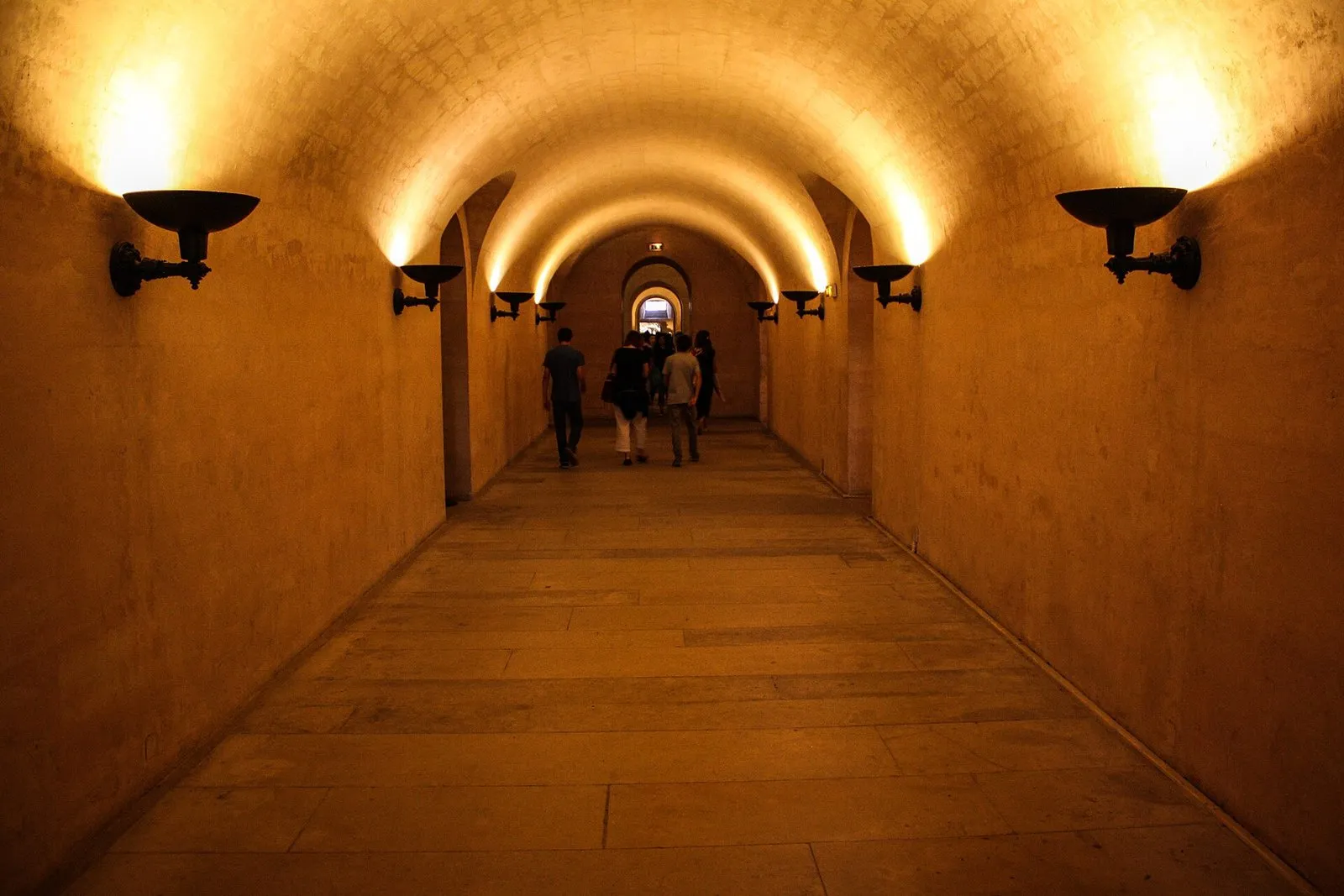
Photo: Shadowgate, CC BY 2.0, via Wikimedia Commons

Because the price depends on the season, check which half of the year you are in: €13 until 31 March, €16 from April to September, with a €13 Wednesday.
Around the square
Our guides to the church of Saint-Étienne-du-Mont, the Sorbonne and the Luxembourg Gardens cover the neighbouring sites, and the Latin Quarter guide puts them in context.
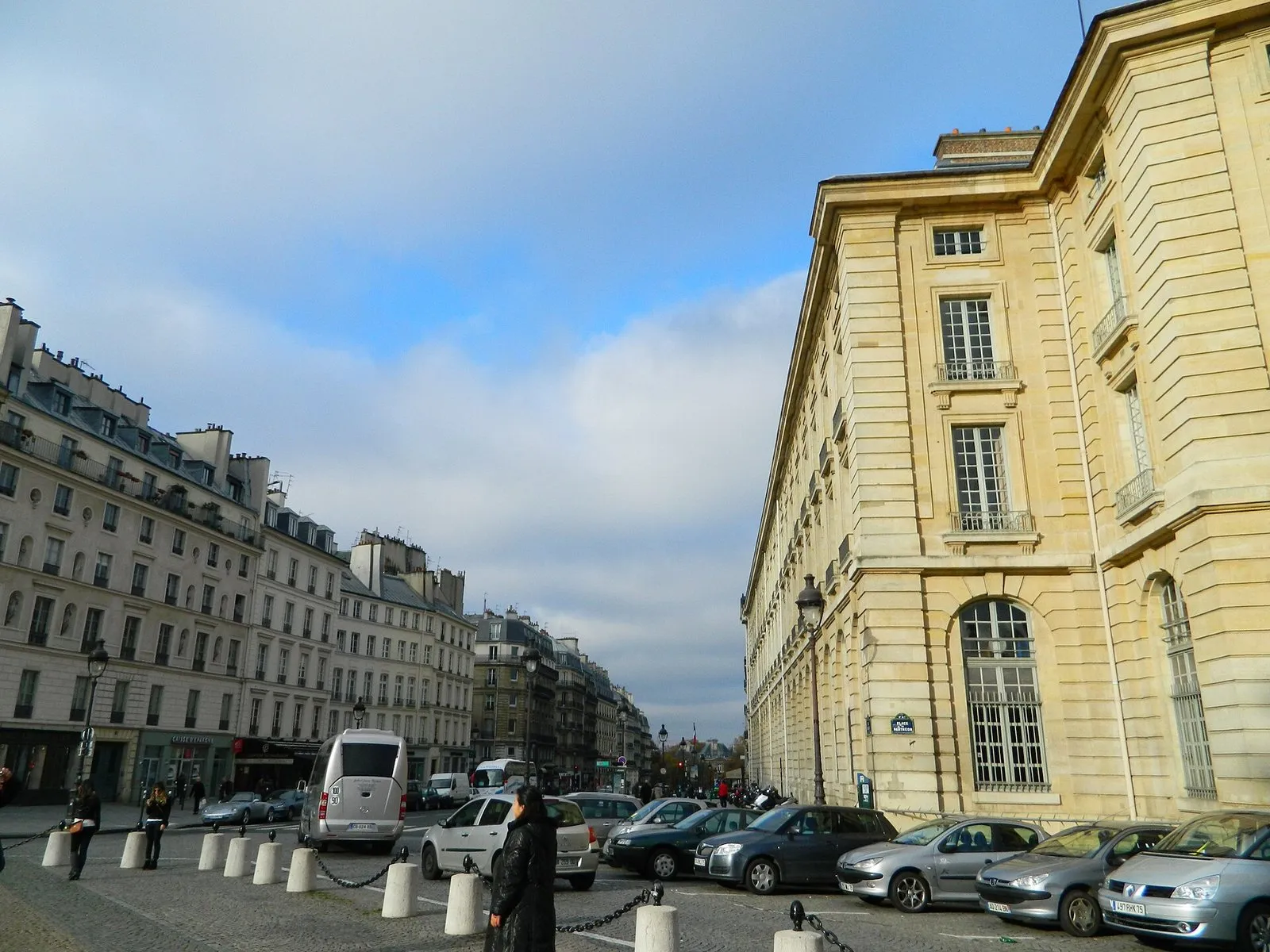
Photo: Freepenguin, CC BY-SA 3.0, via Wikimedia Commons

Getting there
Four stations lie within 600 metres in a straight line. Luxembourg (RER B) is 439 metres away and Cardinal Lemoine (line 10) 440; Maubert – Mutualité (line 10) is 496 metres and Cluny – La Sorbonne (line 10) 578. By our method, which multiplies the straight line by 1.3 and walks at 80 metres a minute, that is between 7 and 10 minutes on foot. From Luxembourg, the walk follows rue Soufflot, which opens onto the colonnade.
Line 4 is no help at the moment: the Saint-Michel platforms are closed until 19 December 2026, and the two stations above are enough.
Choosing your moment
The monument is open every day except 1 January, 1 May and 25 December, so the choice is about the season and the first Monday. From October to March the monument opens at 10 a.m. and closes at 6 p.m.; from April to September it closes at 6.30 p.m. On the first working Monday of each month it opens at noon, which makes it a poor day for an early start. Between April and September, Wednesday carries the lower €13 rate; the first Sunday of the month is free from January to March and from November to December.
Allow for the 45-minute cut-off: the last access is three-quarters of an hour before closing, and the crypt is the part that takes longest.
What to look at
- The façade. The monument is 110 metres long and 84 wide, with a portico of Corinthian columns. The pediment, by David d’Angers, shows the Homeland handing out Liberty and protecting the Sciences and History, beneath the inscription “Aux grands Hommes, la Patrie reconnaissante” (Wikipedia, Panthéon (Paris)).
- The walls. Of the 42 windows in the original church, 38 were walled up when it became a Panthéon, leaving the nave lit from far fewer openings than its plan first allowed.
- The crypt. It runs under the whole building in four galleries; according to Wikipedia, 83 people lie there. The official site lists the first names: Voltaire (1791), Rousseau (1794), Victor Hugo, Marie Curie and Simone Veil.
- The dome from the outside. The panorama is closed, but the dome stands 83 metres high, and from the place du Panthéon the whole composition can be seen without a ticket.
History in brief
Louis XV’s vow of 1744 led to the first stone on 6 September 1764; the building was finished in 1790, after Soufflot’s death. The Revolution turned it into a monument to “great men”, and between 1790 and 1885 its use changed six times, with Victor Hugo’s funeral settling the question. Marie Curie, in 1995, was the first woman to be admitted for her own merits.
Combining it with
Walking distances below are straight-line figures from the coordinates in our data, with times by our method.
| Place | Distance | On foot |
|---|---|---|
| Saint-Étienne-du-Mont | 155 m | 3 min |
| Place de la Contrescarpe | 327 m | 5 min |
| Rue Mouffetard | 403 m | 7 min |
| Sorbonne | 425 m | 7 min |
| Arènes de Lutèce | 492 m | 8 min |
| Cluny Museum | 541 m | 9 min |
| Luxembourg Gardens | 631 m | 10 min |
The church next door is the shortest pairing. For a half-day on foot, the Sorbonne and the Cluny Museum both lie within 541 metres of the monument, and the Luxembourg Gardens, 631 metres away, close the walk.
Where to sleep nearby
Four hotels of our base stand within 300 metres in a straight line, two of them three-star and two four-star; 47 are within 500 metres. The list of hotels near the Panthéon ranks them, and the Latin Quarter guide places the monument among the others.
Hotels around the place du Panthéon
Two hotels of our database stand on the place itself: the Hôtel des Grands Hommes at no. 17, 95 metres from the point we hold for the monument, and the Hôtel Les Dames du Panthéon at no. 19, 103 metres. The next nearest is 259 metres away, and the section below lists the closest hotels in a straight line. For the longer ranking, see our list of hotels near the Panthéon.
History and distinctive features
- Louis XV, gravely ill at Metz in 1744, promised to rebuild the church of Sainte-Geneviève. The first stone was laid on 6 September 1764, and the site was completed in 1790, after the death of the architect Soufflot. Source : paris-pantheon.fr
- Soufflot chose a Greek-cross plan topped by a triple dome. Source : paris-pantheon.fr
- Its function changed six times in the nineteenth century, including a Temple of Humanity in 1848; the funeral of Victor Hugo in 1885 settled its role as a Panthéon for good. Source : paris-pantheon.fr
- Voltaire (1791) and Rousseau (1794) are its oldest residents. In 1995 Marie Curie became the first woman admitted on her own merits, followed by Geneviève de Gaulle-Anthonioz, Germaine Tillion and Simone Veil, with Joséphine Baker honoured by a cenotaph. Source : paris-pantheon.fr
- According to the official site, the latest inductions are Missak Manouchian in February 2024 and Robert Badinter in October 2025; a tribute to Marc and Simonne Bloch was held on 23 June 2026. Source : paris-pantheon.fr
Hotels near the Panthéon
Some links are affiliate links: if you book through them, we may earn a commission, at no extra cost to you. How we are paid
Other hotels
- Hôtel des Grands Hommes ★★★ 1 min walk · 100 m See availability
- Hôtel Les Dames du Panthéon ★★★★ 2 min walk · 150 m See availability
- Hôtel Madeleine de Senlis ★★★ 4 min walk · 350 m See availability
- Hôtel Le Petit Paris ★★★★ 4 min walk · 350 m See availability
- Villa Panthéon ★★★★ 5 min walk · 400 m See availability
- Hôtel Atmosphères ★★★★ 5 min walk · 400 m See availability
Within 600 m as the crow flies, nearest first. Walking times are estimates: straight-line distance × 1.3, at 80 metres a minute, to the station, not to a specific exit.
Tours and tickets
Some links are affiliate links: if you book through them, we may earn a commission, at no extra cost to you. How we are paid
-
GetYourGuide
Panthéon admission ticket
An entry ticket to the Panthéon sold on GetYourGuide, seen in its catalogue on 6 October 2026; dates and prices have not been checked.
See it on GetYourGuide Partner link
Frequently asked questions
What are the Panthéon’s opening hours?
From 1 October to 31 March, 10 a.m. to 6 p.m., with last access 45 minutes before closing; from 1 April to 30 September, 10 a.m. to 6.30 p.m. On the first working Monday of the month it opens at noon, and it is closed on 1 January, 1 May and 25 December.
How much does the Panthéon cost in 2026?
€13 at the individual rate until 31 March, and €16 from 1 April to 30 September (€13 on Wednesdays). The joint ticket with the Basilica of Saint-Denis is €26. The partner rate, €11.50 in winter 2025–2026, has not been published for 2026–2027.
Is the Panthéon free?
For some visitors. Under-16s with an e-ticket, visitors with disabilities and their companion are free, and so is everyone on the first Sunday of the month from January to March and from November to December. Ages 16 to 25 from the EU, teachers and job-seekers are free at the desk.
Can you climb to the dome?
Not at present. The panorama of the dome is closed for works, a banner on every page of the official site says so, and no reopening date has been announced. The ticket gives access to the nave and the crypt.
Who is buried in the crypt?
Among others Voltaire, Rousseau, Victor Hugo, Marie Curie, Jean Moulin and Simone Veil. Joséphine Baker is honoured by a cenotaph.
Which metro station is closest?
Luxembourg on the RER B and Cardinal Lemoine on line 10 are about the same distance, around 440 metres. Saint-Michel on line 4 is closed until 19 December 2026, which does not affect the visit.
Are there audioguides?
Yes, audioguides in ten languages are offered on site. The programme for October 2026 also lists a guided visit, “Le Panthéon et les sciences”, on 25 October.
How long does a visit to the Panthéon take?
The official site does not give a duration. The ticket covers the nave and the crypt, with audioguides in ten languages; since the dome is closed, the visit is shorter than it used to be, and the 45-minute last-access rule is the only fixed limit.
What does the inscription on the Panthéon say?
“Aux grands Hommes, la Patrie reconnaissante”, which means “To the great men, the grateful homeland”. It is carved on the pediment, whose relief is by David d’Angers.
How big is the Panthéon?
110 metres long and 84 wide, with a dome 83 metres high, according to Wikipedia.
Can I see the Panthéon without paying?
From outside, yes. The façade, the pediment and the place du Panthéon are open to everyone.