Our guides
Natural History Museum in Paris — the Grande Galerie de l’Évolution
Natural History Museum at the Jardin des Plantes — Grande Galerie de l’Évolution hours, 2026 ticket prices, the closed palaeontology gallery and hotels nearby. Checked October 2026.
© Benh LIEU SONG, CC BY 3.0 — Wikimedia Commons

A hall of iron and glass
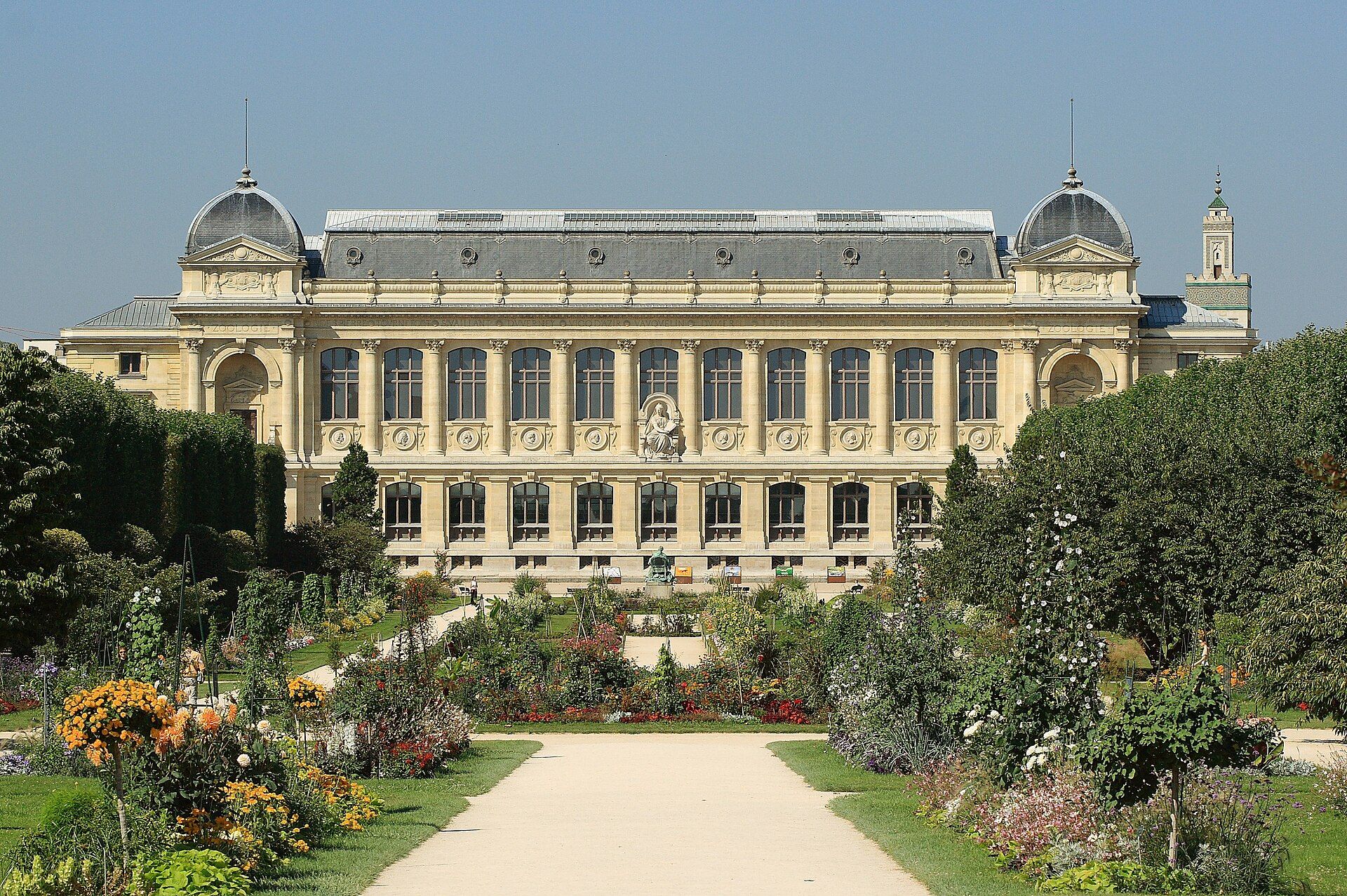
The Grande Galerie de l’Évolution is the flagship of the Muséum national d’Histoire naturelle, in the Jardin des Plantes. Jules André built the gallery, which opened in 1889: a nave of cast iron, glass and woodwork ringed by three balconies, under a glass roof of 1,000 square metres. It has borne its present name since the renovation that reopened it in 1994.
The visit moves from the sea — skeletons of a southern right whale, a blue rorqual, a sperm whale and a giant squid — to the African Caravan, then to evolution and the room of threatened and extinct species. Historic specimens are scattered through it, among them the rhinoceros of Louis XV, the quagga and the Asian elephant Siam. The giant panda sent to Paris by Father David in the nineteenth century is also here.
What is closed, and what is new in 2026
The change to know before you come is a closure. The Galerie de Paléontologie et d’Anatomie comparée, at 2 rue Buffon, shut for works on 19 January 2026 and is due to reopen during 2027, so the dinosaur and large-mammal skeletons cannot be seen this year. The Grande Galerie and the Geology and Mineralogy Gallery remain open.
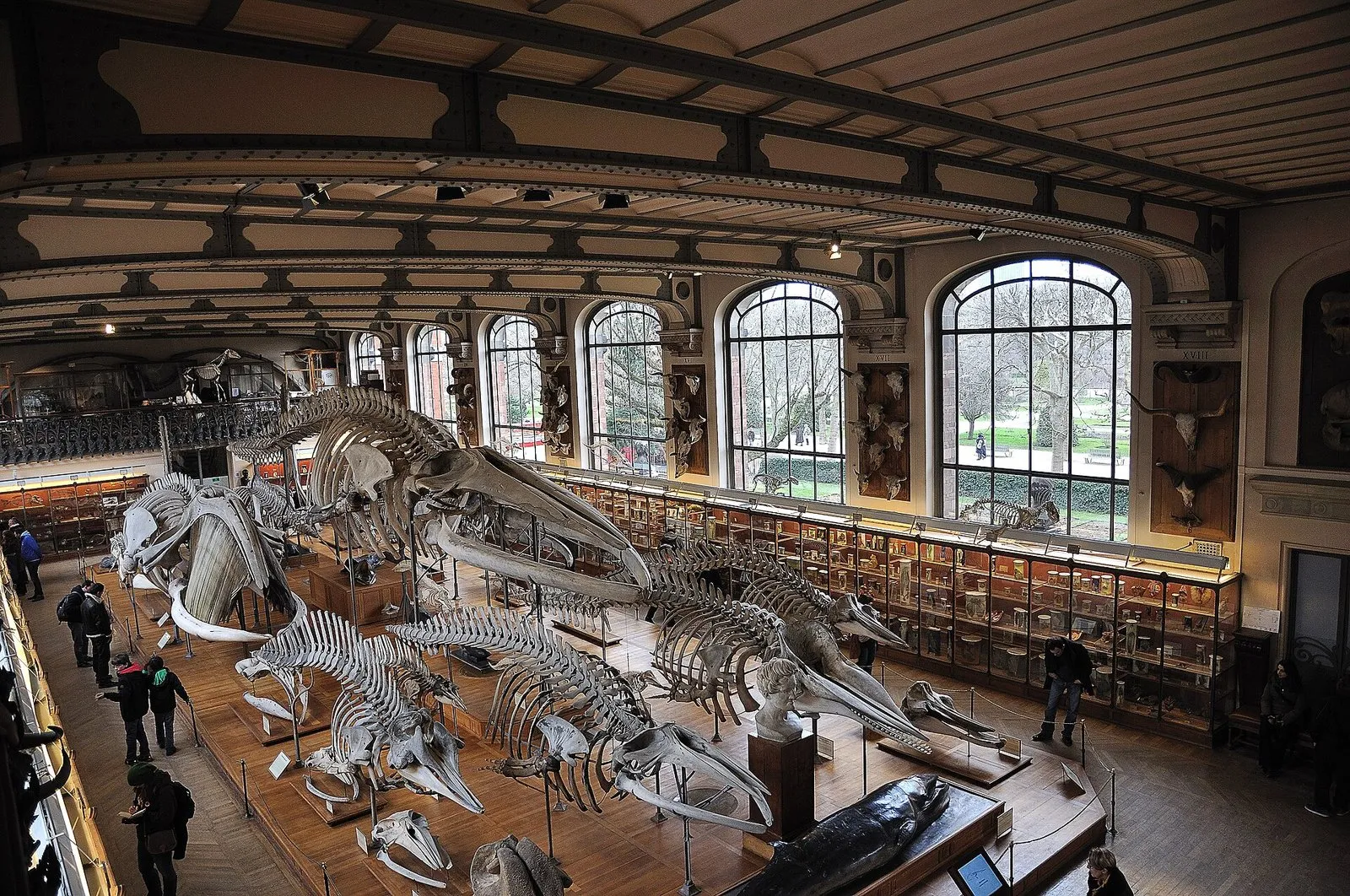
Photo: André Alliot, CC0, via Wikimedia Commons

Two exhibitions are on in autumn 2026. “Artistes au Museum”, with more than 300 works, runs from 23 September 2026 to 7 March 2027 for the Museum’s 400th anniversary. “Sur les traces des dinosaures”, on the digs at Angeac-Charente, is shown on the first floor; we found no end date for it.
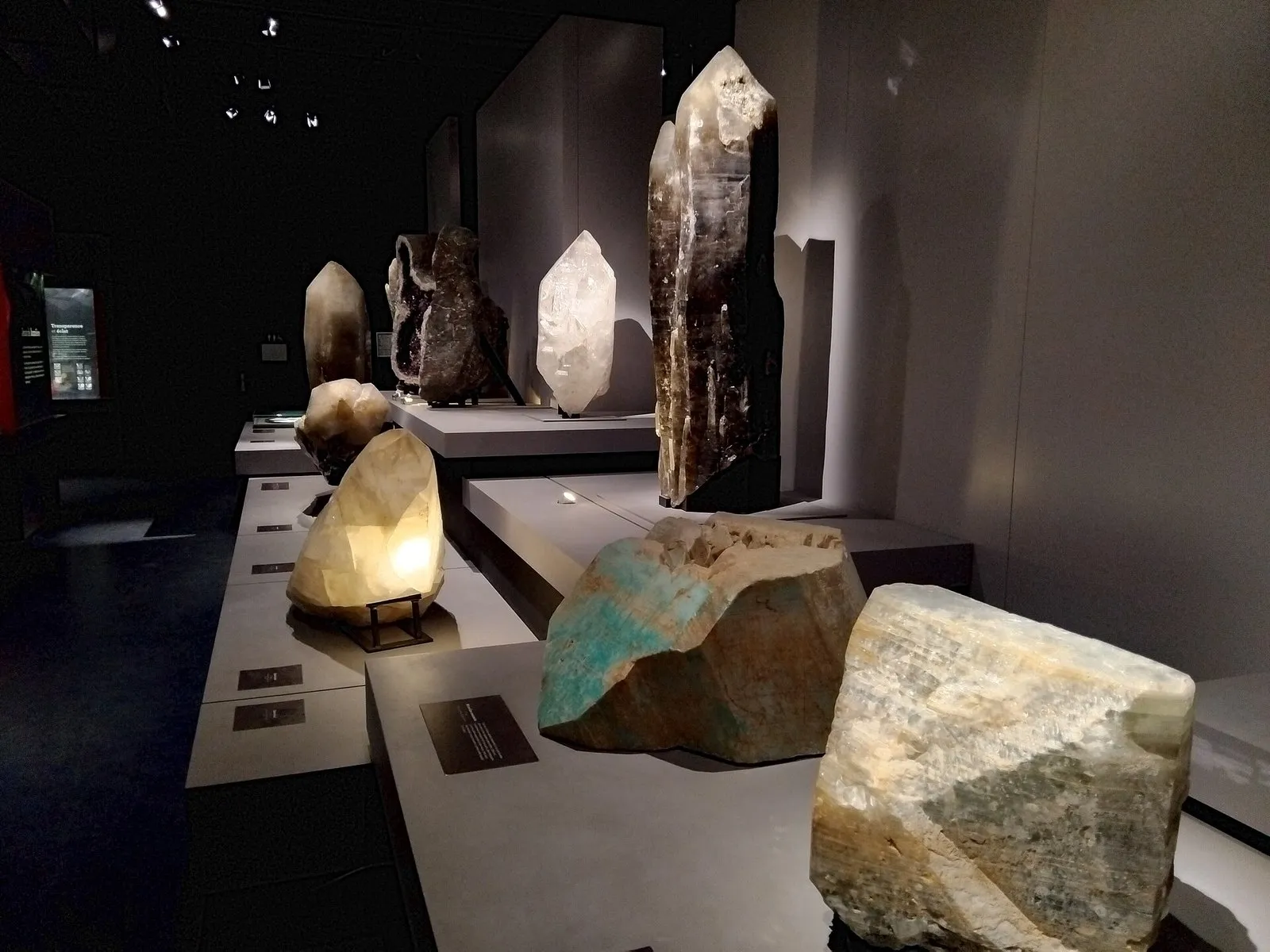
Photo: Hypsibius, CC BY 4.0, via Wikimedia Commons

Tickets, in practice
A permanent-collection ticket is €13, or €10 reduced. Each temporary exhibition adds a supplement and a different family pass (see above). Entry to the permanent collection is free for under-25s, so a family with young adults should check the list of free categories before buying. There is no combined ticket for the Museum’s sites, but a “Discovery” offer gives a reduced rate on a second site within three months.
Getting there
Place Monge (line 7) is the nearest station, about 314 metres from the point we hold for the gallery, a walk of about 5 minutes by our method, which multiplies the straight line by 1.3 and walks at 80 metres a minute. Censier – Daubenton (line 7) is 413 metres away, Jussieu (lines 7 and 10) 428 and Saint-Marcel (line 5) 537. The address is 36 rue Geoffroy-Saint-Hilaire.
Choosing your moment
The gallery is closed on Tuesdays, like the Grandes Serres and the geology gallery, and opens from 10 a.m. to 6 p.m. the other days, with the last tickets sold an hour before closing. It is also closed on 1 January, 1 May and 25 December. The geology gallery shortens to 10 a.m.–5 p.m. after 25 October. Free admission to the permanent collection, for those who qualify, saves the €13 ticket but not the supplement of the temporary exhibition.
The dinosaur exhibition “Sur les traces des dinosaures” opens on Wednesdays, Saturdays and Sundays, and every day except Tuesday during school holidays. The festive weekend for the anniversary falls on 17 and 18 October 2026.
What to look at
- The nave. It measures 55 metres by 25 and rises 30 metres, according to Wikipedia; the three levels offer 6,000 square metres of permanent exhibition.
- The collection in numbers. About 100 fish, amphibians and reptiles, 450 birds and 350 mammals are on show, according to Wikipedia.
- The room of threatened and extinct species. It shows 257 naturalised animals, including extinct ones, and holds the giant panda sent to Paris by Father David, which with another specimen forms the type series of Ailuropoda melanoleuca.
- The historic animals. The rhinoceros of Louis XV, the quagga and the Asian elephant Siam.
- The geology and mineralogy gallery. Martian meteorites and giant crystals, at €9 or €7, free for under-25s.
History in brief
The Muséum descends from the royal garden of medicinal plants created by Louis XIII’s edict of 1626, and became the Muséum national d’histoire naturelle by decree of the Convention on 10 June 1793. The zoology gallery was inaugurated in July 1889, to the plans of Louis Jules André. It was renovated by Paul Chemetov and Borja Huidobro, with the scenographer René Allio, and reopened on 21 June 1994 as the Grande Galerie de l’Évolution. The Muséum received 3,742,929 visitors across all its sites in 2023, according to Wikipedia.
Combining it with
From the gallery’s coordinates, in a straight line; times by our method.
| Place | Distance | On foot |
|---|---|---|
| Grand Mosque of Paris | 106 m | 2 min |
| Jardin des Plantes | 308 m | 5 min |
| Arènes de Lutèce | 442 m | 7 min |
| Ménagerie | 462 m | 8 min |
| Rue Mouffetard | 515 m | 8 min |
| Place de la Contrescarpe | 559 m | 9 min |
| Institut du monde arabe | 747 m | 12 min |
The Grand Mosque is the nearest neighbour, 106 metres away, and the garden and Ménagerie sit within 462 metres.
Hotels nearby, and getting there
The closest hotel to the gallery is the Hôtel du Jardin des Plantes, about 228 metres away, then the Hôtel Saint-Christophe, 318 metres, the Best Western Quartier Latin Panthéon, 327 metres, and the Hôtel Maxim Quartier Latin, 382 metres, all as the crow flies. For the whole park, see hotels near the Jardin des Plantes. The garden itself is described on our Jardin des Plantes page, and the zoo on the Ménagerie page.
History and distinctive features
- The gallery was built by Jules André and opened in 1889 — a hall of cast iron, glass and woodwork ringed by three balconies, under a 1,000 m² glass roof. Source : jardindesplantesdeparis.fr
- It reopened in 1994 as the Grande Galerie de l’Évolution after a renovation by Borja Huidobro, Paul Chemetov and the scenographer René Allio. Source : jardindesplantesdeparis.fr
- The room of threatened and extinct species holds the giant panda described and sent to Paris by Father David in the nineteenth century; with another specimen of the Museum, it forms the type series of the species Ailuropoda melanoleuca. Source : jardindesplantesdeparis.fr
- Historic specimens include the rhinoceros of Louis XV, the quagga and Siam, the Asian elephant. Source : jardindesplantesdeparis.fr
- The Museum descends from the Jardin royal des plantes médicinales created by edict of Louis XIII in 1626, and became the Muséum national d’Histoire naturelle by decree of the Convention on 10 June 1793 — hence the “400 years” celebrated in 2026. Source : mnhn.fr
Frequently asked questions
Where is the Natural History Museum in Paris?
In the Jardin des Plantes, in the 5th arrondissement; the Grande Galerie de l’Évolution is at 36 rue Geoffroy-Saint-Hilaire, about 314 metres from Place Monge (line 7).
What are the opening hours of the Grande Galerie de l’Évolution?
Every day except Tuesday, from 10 a.m. to 6 p.m., with the last ticket sold one hour before closing. It is closed on 1 January, 1 May and 25 December.
How much is a ticket to the Grande Galerie de l’Évolution?
€13 full rate and €10 reduced for the permanent collection, according to the Jardin des Plantes site on 4 October 2026. Add the temporary exhibition and it is €16 and €13.
Can I see the dinosaur skeletons in 2026?
No. The Galerie de Paléontologie et d’Anatomie comparée, with its skeletons of dinosaurs and large mammals, has been closed for works since 19 January 2026 and is due to reopen during 2027. The temporary exhibition “Sur les traces des dinosaures” is shown in the Petite Galerie, on the first floor of the Grande Galerie.
What is the exhibition “Artistes au Museum”?
A show of more than 300 works on art and science, held for the Museum’s 400th anniversary from 23 September 2026 to 7 March 2027, every day except Tuesday.
Is the museum free for children?
The permanent collection is free for under-25s. The temporary exhibition is free only for under-3s, with a reduced rate from age 3.
Is there a cloakroom?
Free lockers are available in the Grande Galerie de l’Évolution and in the Geology gallery.
When was the Grande Galerie de l’Évolution built?
The zoology gallery was inaugurated in July 1889 to plans by Louis Jules André and reopened as the Grande Galerie de l’Évolution on 21 June 1994.
How big is the Grande Galerie de l’Évolution?
The nave is 55 metres by 25 and 30 metres high, and the permanent exhibition covers 6,000 square metres on three levels, according to Wikipedia.
Which animals are on show at the Grande Galerie?
According to Wikipedia, about 100 fish, amphibians and reptiles, 450 birds and 350 mammals, with 257 threatened or extinct animals in a room of their own.
Is the Geology and Mineralogy Gallery worth adding?
It has its own ticket, €9 or €7, and shows Martian meteorites and giant crystals. It is free for under-25s and closed on Tuesdays.